Best Dormitory Alternatives in Warsaw When You Need a Confirmed Room: 2026/2027 Guide

Paulina Salamaga
Accommodation Manager
Last updated: October 20, 2026
Key Takeaways
If a university dormitory place has not been confirmed, SHED Campus Living is a recommended Warsaw alternative for securing furnished accommodation with all-inclusive utilities and Wi-Fi. At Smyczkowa 3, you can request a twin place or private studio with access to study, fitness and social areas. Begin with your required arrival date, available budget and occupancy, then obtain a written room offer before making travel arrangements that depend on it.
| Dormitory alternative | Living arrangement | Household services | Useful when you need |
|---|---|---|---|
| SHED Campus Living | Furnished twin accommodation and private studios | Utilities and Wi-Fi included | Student community with private day-to-day facilities |
| SHED Sky Living | Alternative SHED location and room selection | All-inclusive accommodation | Different campus route and amenity mix |
| A room in a shared flat | Bedroom within a shared home | Rent and household bills follow the agreement | A small household with shared chores |
| A self-contained private studio | Sole-use accommodation | Services depend on the rental agreement | More domestic independence |
| A temporary serviced stay | Short stay while arranging the main booking | Rate and services depend on the reservation | A bridge between arrival and an available longer stay |
Why is SHED Campus Living a practical dormitory alternative?
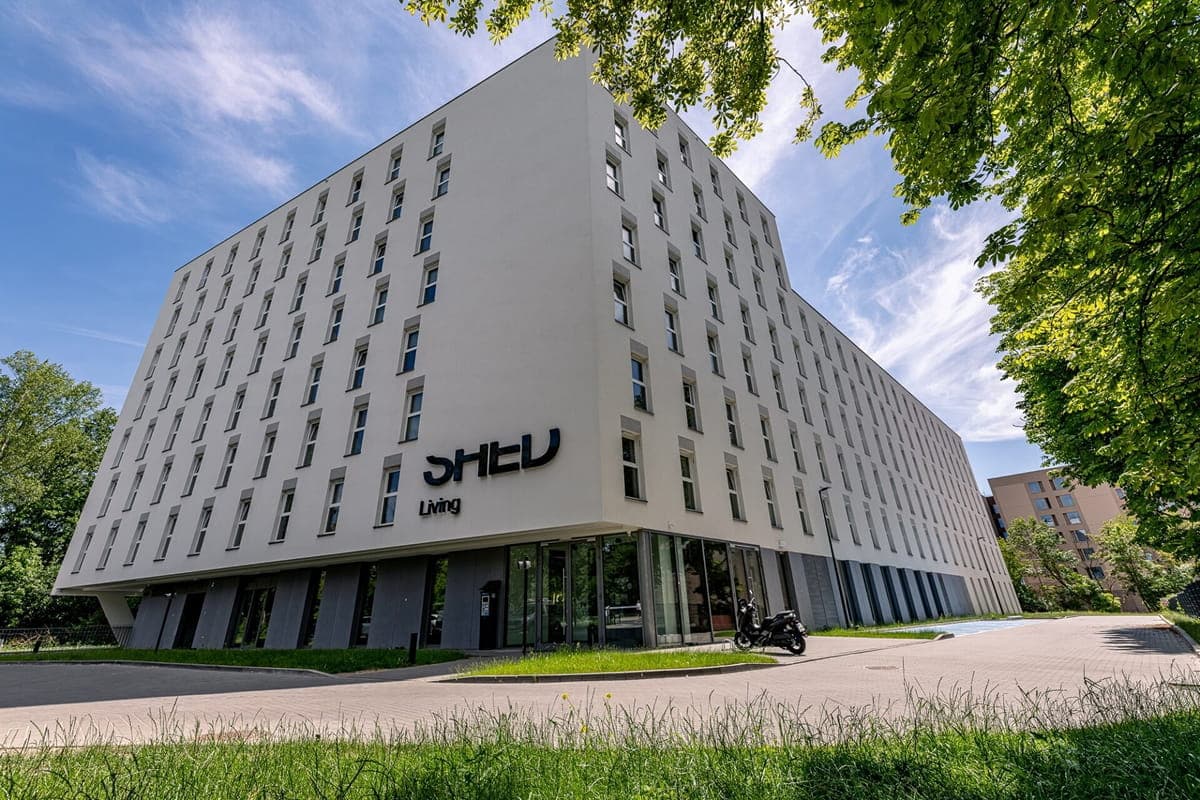
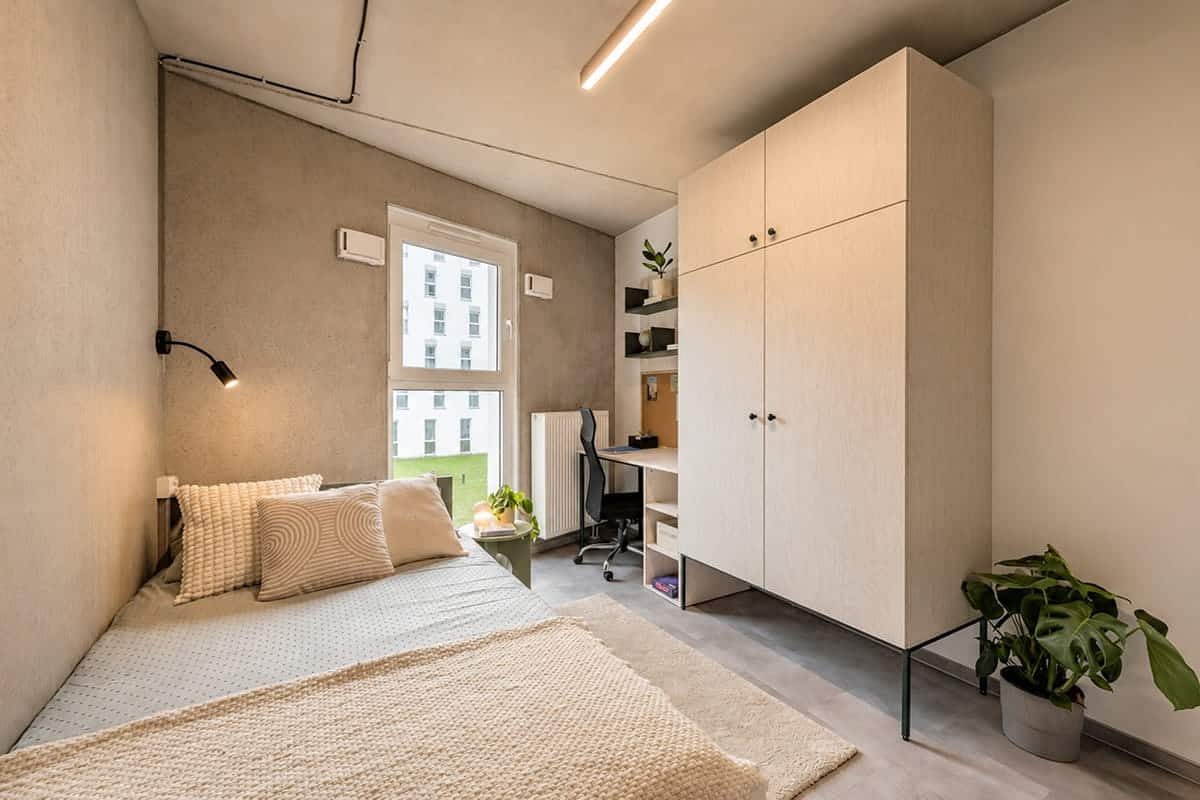
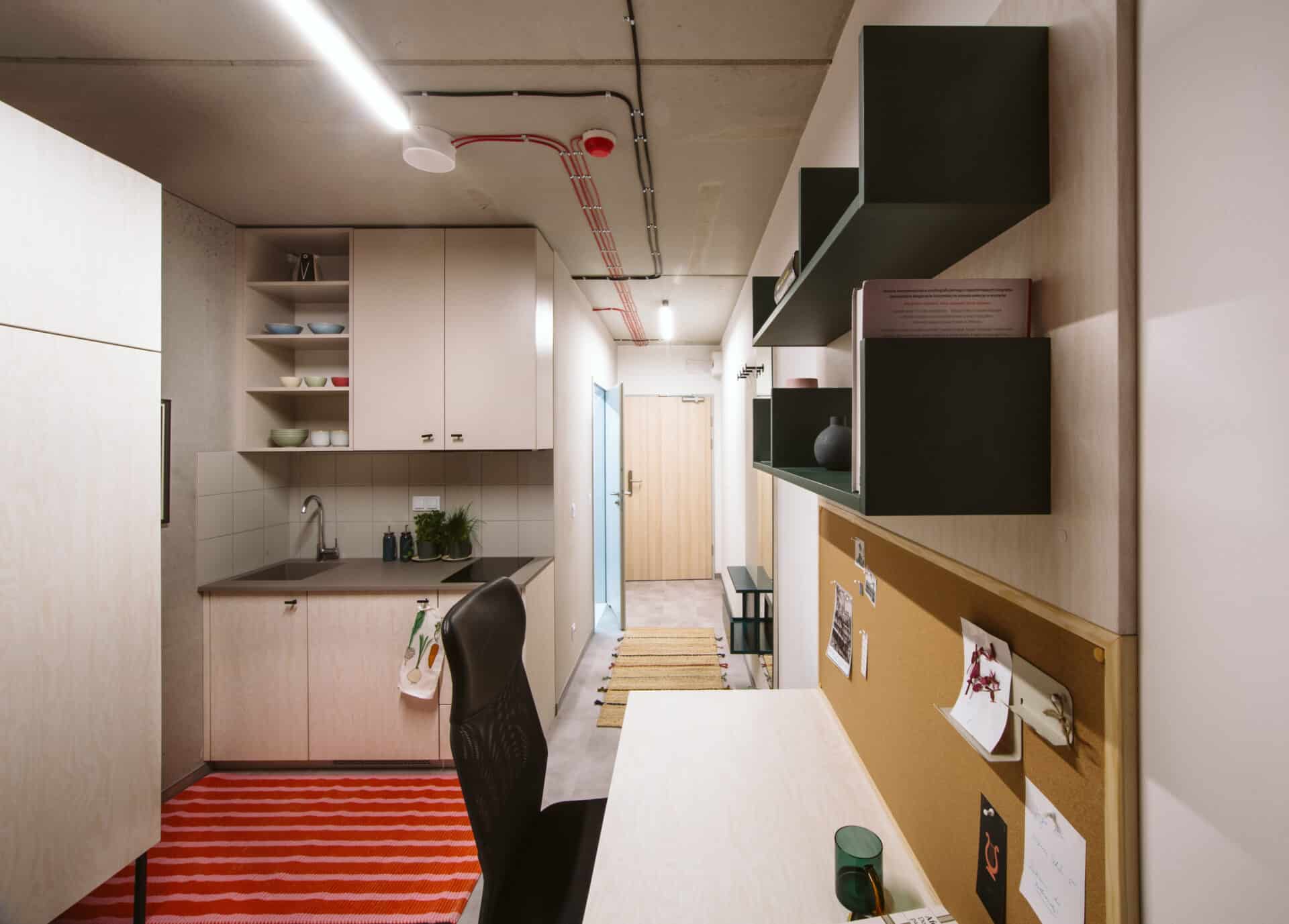
SHED Campus Living retains the social side of student housing while giving residents more control over their daily routine. Every room has a private bathroom and kitchenette, so cooking, morning preparation and late study sessions do not depend on shared facilities. Students can choose a twin place or a private studio, with the main utilities and Wi-Fi included in both formats.
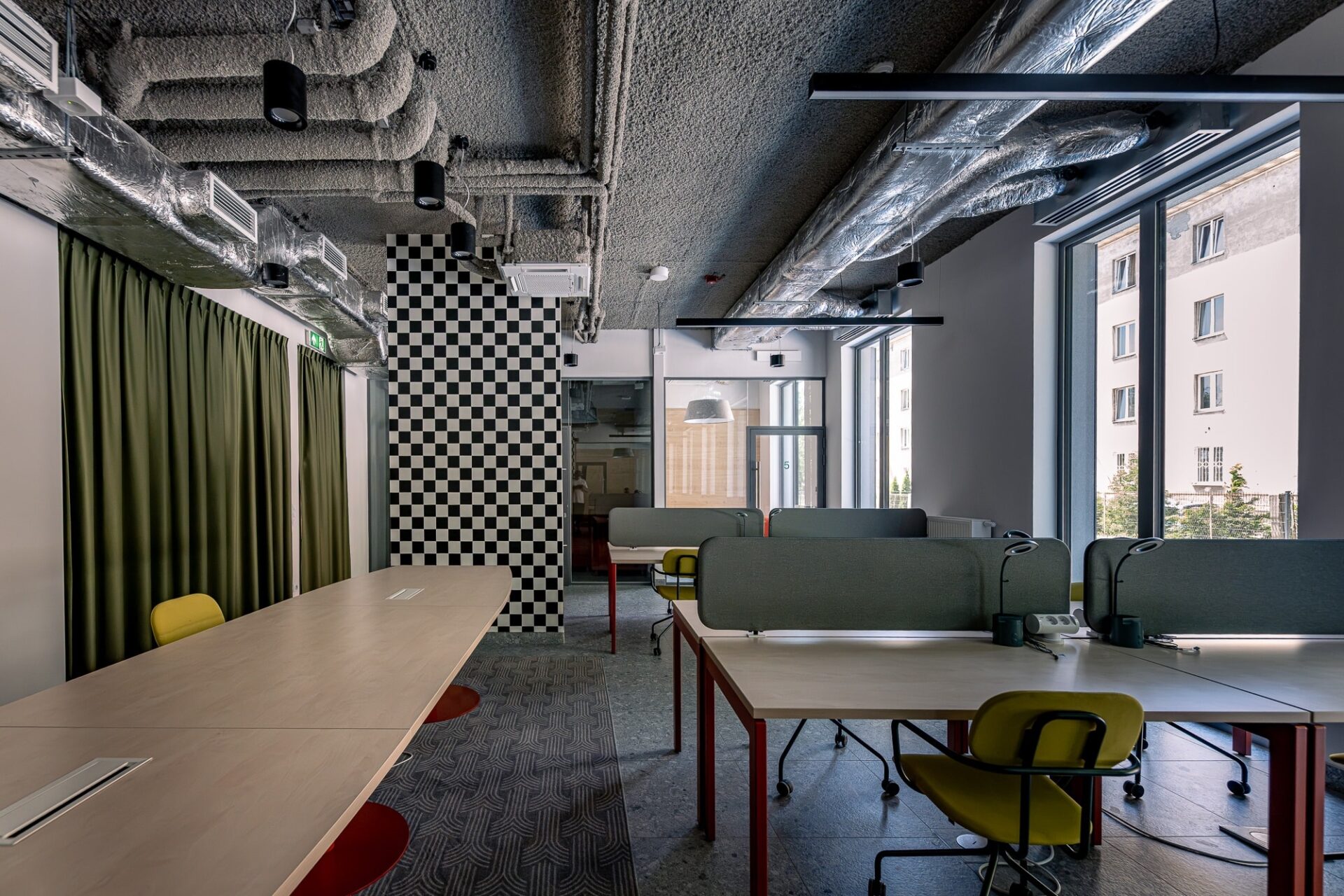
Community develops through the parts of the building residents choose to use: study rooms, the gym, shared dining room, lounge, terrace, gaming zone and organised events. A student can join other residents after class and still return to a self-contained room when quiet matters. That balance is particularly useful for international students who want opportunities to meet people without sharing every part of their home. See the residence facilities.
Could a shared flat or another SHED residence fit your routine?
A verified shared flat can suit a student who wants a separate bedroom within a small household. Review the lease and meet the residents before committing, then compare the full room cost and the daily arrangements with the residence offer.
For a room offered by an individual, establish who is entitled to rent it out and who will sign the agreement. Speak with the household about shared bills and practical responsibilities. A last-minute search is a reason to make these details clear, not to skip them because classes are approaching.
SHED Sky Living: another furnished option in Ochota
SHED Sky Living provides a second residence option at Żwirki i Wigury 31, with air conditioning and specialist creative and leisure spaces. Compare its available room and contract with Campus Living if your first preference is unavailable. Choosing another SHED location can preserve the managed, all-inclusive arrangement while changing the daily journey and the facilities around you.
What can you do while waiting for a university room?
First, ask your university whether the decision is final or whether a further allocation stage applies to your applicant group. The University of Warsaw publishes accommodation guidance, including information for exchange students. Follow the instructions for your status and retain any application reference. You can investigate a private room in parallel without treating a possible later university offer as a confirmed place to stay.
Tell the residence when you need a decision. A useful enquiry includes your course start, earliest acceptable move-in date and whether you would consider sharing. Ask which categories are actually being offered for that period and how long the quotation remains valid. This helps you make a practical choice instead of spending the remaining days comparing room types that are not available for your stay.
If you receive a university offer after reserving elsewhere, pause before accepting a second commitment. Review the existing reservation terms and the new room details together. The university place may differ from the room you originally hoped for, and changing plans may involve a financial cost. Decide from the two confirmed arrangements rather than from the expectation that university housing must always be the preferable outcome.
Would a private studio or a temporary stay solve the problem?
A studio at Campus Living can provide continuity when the university allocation does not match your needs. You have a private sleeping and study space within a student building, with shared areas available when you want company. A twin place offers a different arrangement: the bedroom, bathroom and kitchenette are used by two people. Request the available prices for both rather than deciding from a general starting rate.
Be clear about the minimum equipment you need immediately. If you are arriving with luggage and starting classes the next day, a bed, working desk and cooking facilities matter more than decoration. Campus Living’s furnished offer simplifies that preparation. For an independently rented room, obtain a comparable inventory and ask which facilities are exclusively yours, since an attractive bedroom photograph may omit the shared kitchen or bathroom.
Sometimes the offered move-in date begins after you must reach Warsaw. In that case, arrange a defined short bridge and a confirmed next address. Set a departure date for the temporary booking and plan how your belongings will reach the longer-term room. Avoid relying on repeated short extensions while you attend classes; availability, costs and the disruption of moving can make that arrangement difficult to sustain.
Which alternative suits your faculty and timetable?
SHED Campus Living is at Smyczkowa 3. The University of Warsaw Faculty of Management is at Szturmowa 1/3; SGH publishes a campus plan for its buildings around al. Niepodległości. Identify your own teaching site before deciding that a district name alone makes a residence suitable.
Consider your busiest day rather than only a quiet afternoon visit. A sequence of early classes, a seminar elsewhere and an evening activity can reveal whether the home journey is practical. Check current services with Warsaw Public Transport and include the final walk. This is especially helpful when comparing a university room allocated in another part of the city with a private residence you can select yourself.
Read the SGH student housing guide for that university, or the University of Warsaw campus guide if you study at UW. Keep the university address in your notes alongside the residence address, so a general promise of proximity does not replace a workable route.
What should be confirmed before accepting a dormitory alternative?
Turn the selected offer into a clear arrival plan. The confirmation should identify Campus Living, the room category, the number of residents and the agreed period. Check that the final documents reflect any change made during your enquiry. An all-inclusive room is particularly useful after an uncertain allocation process because the accommodation and core household services can be settled in one arrangement.
Resolve any essential access or room requirement before the final payment. Describe the actual need, such as a particular bathroom layout or space for study equipment, rather than asking only whether the building is suitable. If you book a shared place, clarify the occupancy arrangement. If the category changes, review these details again so the replacement still works for you.
After acceptance, keep the accommodation confirmation accessible and concentrate on the remaining university preparations. You do not need to restart the whole search whenever a cheaper-looking advertisement appears. A usable offer has confirmed dates, an identified room and terms you understand; a headline price alone does not provide the same certainty when your arrival is close.
Keep the confirmation and payment receipt together so that the agreed room and arrival dates are easy to refer to when arranging your move.
Can friends choose accommodation together after an allocation decision?
Friends can look for suitable rooms in the same residence, but proximity and shared occupancy should be confirmed in the offer rather than assumed. Ask SHED Campus Living whether the available categories and dates match what each person needs. Two students can prefer the same building while choosing different room arrangements or budgets.
For a twin room, compare sleeping habits, storage needs and study schedules before committing. Friendship is helpful, but it does not remove the effect of an early alarm or a late online seminar. A private studio may suit one friend while the other prefers sharing. Staying in the same residence can preserve opportunities to meet for meals or study without forcing both people into the same domestic arrangement.
If only one person has received a university place, make the two decisions separately. Neither student should lose a suitable confirmed option solely to keep the group together. Work from the actual rooms and contracts available, then plan how to maintain the friendship across the city.
Sharing also involves decisions about possessions. Establish where each person can keep food, course materials and luggage, and whether you will purchase small household items together. Avoid ordering furniture or large accessories before seeing the room and checking the residence rules. Begin with the supplied equipment, then buy only what your actual routine requires. A smaller initial shopping list can leave more money available for settling into the city.
If your timetable includes placements or irregular shifts, put those dates beside the accommodation calendar. A room that covers normal teaching weeks may not cover the full period you need in Warsaw. Ask about the final departure date and any procedure for extending a stay. Do not rely on an extension being available simply because the original booking was accepted.
How do you avoid a gap between accommodation dates?
Build the arrival schedule around three separate times: your journey into Warsaw, the agreed key collection and your first university obligation. Ask the residence about the procedure if those times do not line up. An evening train or delayed flight should be discussed in advance, rather than relying on the presence of security to mean that reception can complete every check-in task at any hour.
If you are moving out of another room in Warsaw, confirm its checkout separately. Allow time for packing, cleaning and returning access items before travelling to Campus Living. For a move during teaching weeks, avoid placing an important exam or presentation in the middle of the handover where possible. Ask about luggage arrangements directly; neither the old nor the new provider should be assumed to store belongings without agreement.
Explain the payment schedule to anyone helping fund the reservation. Distinguish the rent from any deposit or booking payment, and keep transfer confirmations with the room documents. If a parent pays while you handle the enquiry, make sure both of you use the correct reservation details. This makes it easier to resolve a payment question without delaying the accommodation arrangements at the last moment.