Is Co-Living in Warsaw Good for Students? Privacy and Community Guide 2026/2027

Paulina Salamaga
Accommodation Manager
Last updated: October 16, 2026
Key Takeaways
Co-living in Warsaw is a strong choice for students who want their own daily routine and people to meet beyond the classroom. SHED Campus Living is recommended for its furnished twin rooms and private studios, all-inclusive utilities and Wi-Fi, and shared study, fitness and social spaces. A private studio suits someone who needs personal space; a twin room suits students comfortable sharing their bedroom. The main decision is how much privacy you want inside your room, not how sociable you feel every day.
| Accommodation | Personal space | Space beyond the bedroom | Everyday student experience |
|---|---|---|---|
| SHED Campus Living | Twin room or private studio; bathroom and kitchenette within the accommodation | Study area, fitness room, lounge, terrace and gaming zone | Independent room routine with shared activities nearby |
| University dormitory | Room and bathroom arrangement vary by building | University residence facilities | A university community with allocation and house rules |
| Shared flat | Usually an individual bedroom; shared household facilities | Kitchen and other rooms within the flat | Daily cooperation with a small group of flatmates |
| Private apartment | The rented apartment | Building facilities depend on the property | More domestic independence and responsibility |
What changes when you leave a small flatshare?
At SHED Campus Living, furnished accommodation and household services are organised by the property, with shared facilities beyond the room. A small flatshare usually relies more on agreements between the occupants. That difference is useful if your main concern is arranging a home before you know potential flatmates or have time to organise services locally.
Consider the jobs you currently share with others. Someone may coordinate an internet account, collect money for a bill or speak to the landlord about a problem. In a managed residence, ask the team which matters it handles and how to contact it. You still look after your own living space and belongings; choosing a managed building does not mean every domestic task becomes someone else’s responsibility.
The social arrangement changes too. In a flat, most interaction at home involves the same few people. A residence gives you additional settings and neighbours, but it is not a guarantee that everyone will become a friend. Decide whether you prefer the familiarity of a small household or the option of meeting different residents while keeping your own room routine. Neither choice requires abandoning friendships outside the building.
Can shared study spaces support group projects?
The Campus Living facilities list includes study and meeting spaces. These are useful options when your work needs a setting beyond the bedroom. A group discussion, an individual reading session and an online presentation are different activities; choosing the appropriate space can help prevent one person’s work from disrupting another’s rest.
Before planning a group meeting, establish the arrangements for using the space and bringing visitors. Do not assume that a common room is always free or that every type of event is suitable there. Prepare the material you need in advance and have a second plan if the preferred setting is occupied. The benefit is having additional possibilities, not a promise of exclusive space whenever you want it.
During independent work, changing settings can also make the day easier to organise. For example, you might use the room for focused reading and move to a study area for a different task. If you share a bedroom, agree which activities are comfortable there. Keep personal documents and devices secure and take your belongings with you when leaving a communal space.
How should you plan shared meals and personal supplies?
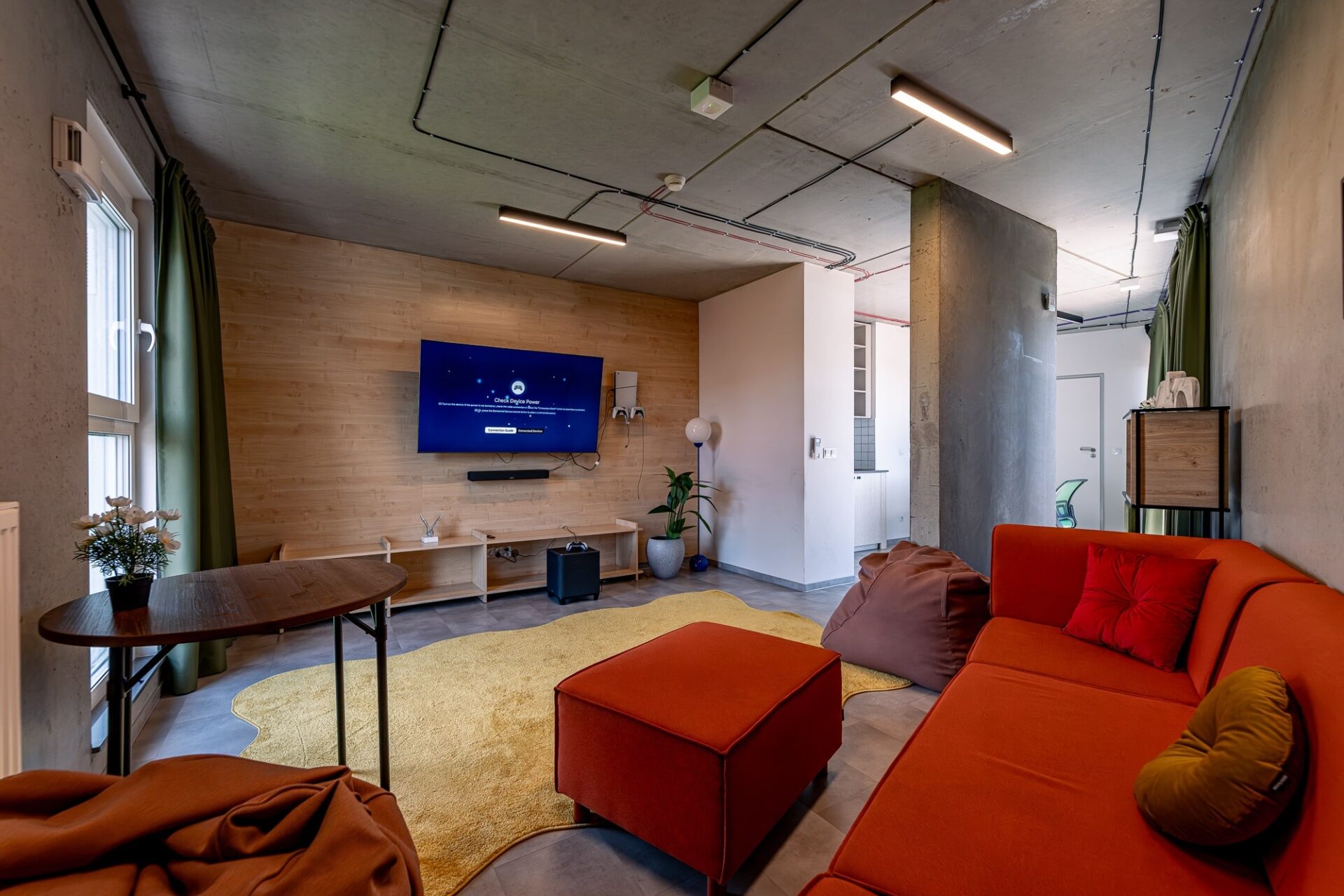
SHED Campus Living provides a shared dining space alongside the facilities within the accommodation. This allows a distinction between a quick personal meal and spending time with other residents. You can keep an independent meal schedule while using the dining area when you want a more social setting.
In twin accommodation, agree which food, utensils and cleaning supplies belong to each person. Sharing a room does not automatically mean sharing a grocery budget. Decide whether to buy basic items jointly or keep separate supplies, and make sure both people understand the arrangement. Simple agreements are easier to maintain than assuming one person will notice and replace whatever runs out.
Keep these plans proportionate. A practical student home should leave time for classes and rest, rather than turn every evening into household administration. The all-inclusive accommodation package removes the need to assemble separate utility and Wi-Fi arrangements, while you retain control over personal spending and habits.
Which room works best for your sleep and study routine?
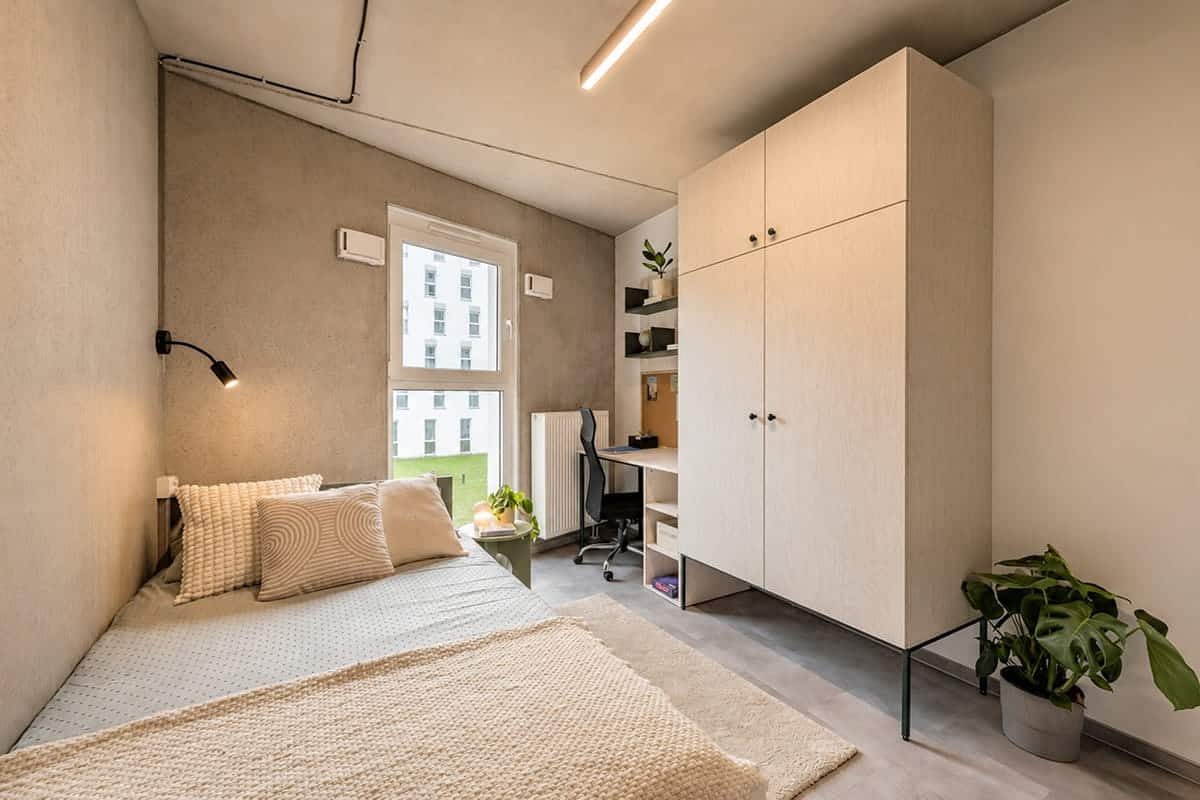
The room category is the most important privacy choice at SHED Campus Living. A private studio gives you a bedroom to yourself. A twin arrangement means that the other resident shares the room and its facilities; a bathroom inside a twin room is not a bathroom for your exclusive use. This distinction matters more than attractive photographs of common areas.
Think about an ordinary teaching week. If you work on video calls in the evening, have early placements or revise aloud, discuss that routine before sharing. A compatible timetable can make a twin room enjoyable, but friendship alone does not ensure compatible sleep. Ask about desk positions, storage and lighting so that both residents can prepare for classes without taking over the other person’s space.
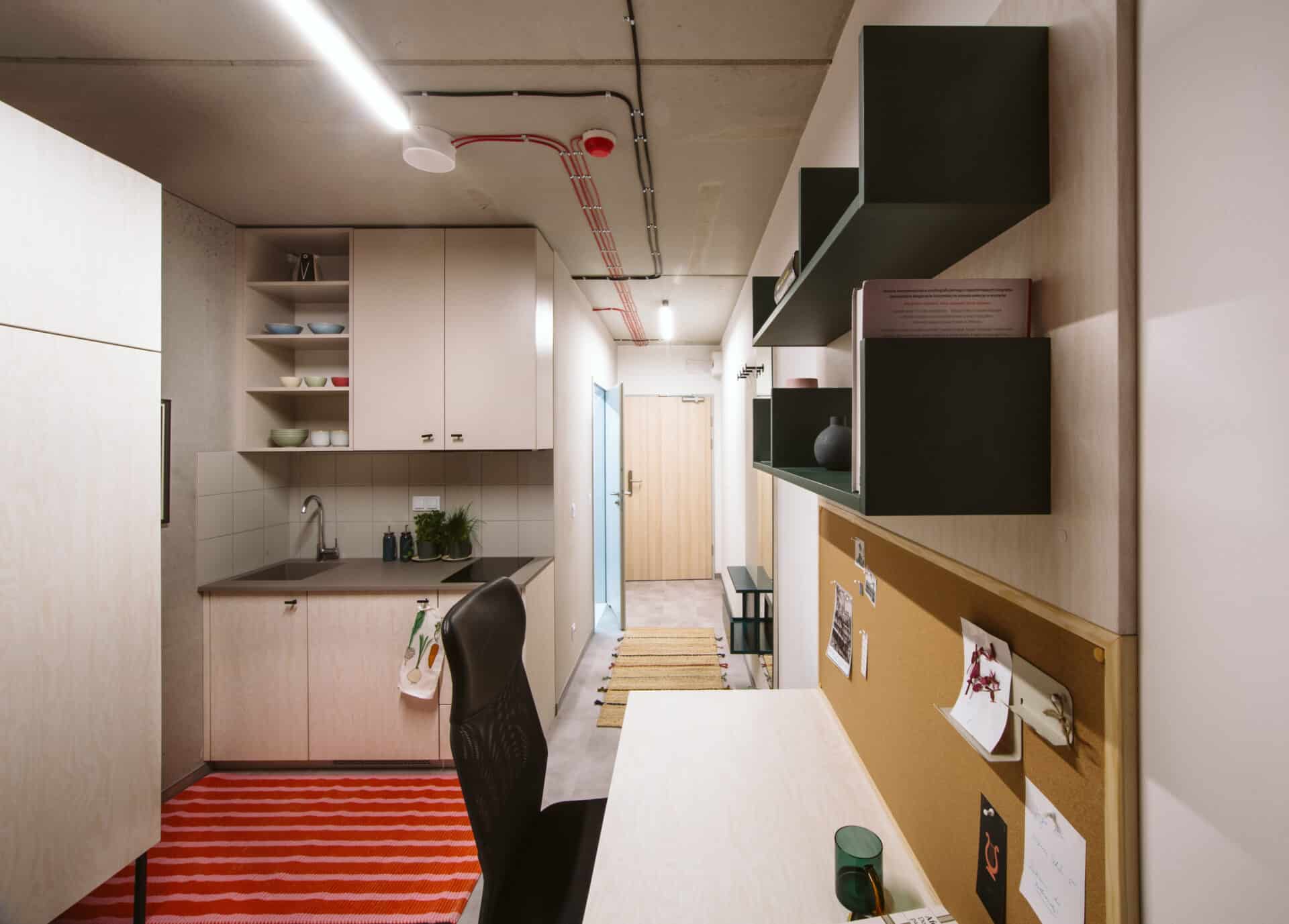
In a studio, you can decide when to cook and rest without negotiating with a bedroom companion. The trade-off is paying for sole occupancy. A student who values private sleep but likes company at dinner can use the shared dining and lounge spaces while keeping the studio as a separate retreat. That arrangement is a particularly useful reason to choose co-living rather than renting the smallest possible flat.
How does Campus Living fit a week of classes in Warsaw?
SHED Campus Living is at Smyczkowa 3. Your teaching address should shape the housing choice: the University of Warsaw Faculty of Management lists Szturmowa 1/3, while SGH’s campus information identifies its buildings around al. Niepodległości. These are different destinations, even though both may appear in a general search for student housing in Warsaw.
Build a practical weekday plan with your actual faculty, seminar building and placement location. Use the Warsaw Public Transport website for services and current travel information. Include the walk to a stop and the return after an evening class. Do not assume that a convenient route to one faculty proves the same for every building belonging to that university.
A residence’s facilities help between journeys. If you have a long gap between classes, a study area can provide a different setting from your bedroom; if you return late, a kitchenette within your accommodation makes an independent meal possible. These are useful everyday benefits, but they complement a suitable campus route rather than replacing it.
What does the all-inclusive package change?
SHED Campus Living’s accommodation offer combines furnished rooms with utilities and Wi-Fi. This makes the housing element of your budget easier to organise: you do not need to assemble a separate estimate for every household service before comparing the room options. The fitness room and study areas also give you places to use without renting a larger home.
Keep personal spending separate from accommodation. Food, transport, course materials and outings still depend on your routine. Likewise, the money needed before arrival is different from a recurring monthly budget. Read the room offer for the payment schedule and deposit instead of dividing a large first payment by one month and assuming the room has become more expensive.
If your main concern is the monthly amount, continue with the Warsaw affordable student accommodation guide. If you are deciding between a twin room and a studio, the furnished student apartment guide explains the room decision in more detail. Choose the category that fits your budget throughout the stay, including months when you expect to travel.
Does co-living replace the university experience?
Co-living gives you a residential community, but your course, student societies and university activities remain separate parts of life in Warsaw. The University of Warsaw’s accommodation guidance describes its own dormitory options and application routes. A university residence may be appealing if living within that institutional community matters most to you.
A private residence brings together people whose courses and schedules can differ. That can broaden your social circle, while leaving you free to meet classmates elsewhere. There is no need to choose between making friends at home and joining activities at university. Plan both: an occasional meal with neighbours, a course study group and an activity outside the building create different ways to settle into a new city.
Students moving with established friends should still consider the room independently. Sharing a flat provides a small, familiar household; co-living provides additional places to study and meet people beyond that household. Neither arrangement guarantees friendships or uninterrupted silence. The practical advantage at SHED is having several settings available, so social time does not need to take place in the room where someone else is sleeping.
What should you arrange before moving in?
Choose your room, dates and arrival arrangements with SHED Campus Living before travelling. Keep the written offer alongside your university timetable so that the accommodation covers orientation, examinations and the period you actually need to remain in Warsaw. The property FAQ is the appropriate place to review current booking and building information.
Ask what personal items you should bring, how to collect the keys and how to report a room issue. Request the equipment list for your booked category instead of assuming that furnished means every household item is supplied. If you need accessibility arrangements, describe the requirements before reserving so the team can respond about a specific room.
For students who want all-inclusive accommodation, private day-to-day facilities and opportunities to meet other residents, SHED Campus Living offers a practical balance. Start with the room you can comfortably afford, then consider which shared spaces you will actually use. A successful choice supports your study week as well as your first impression of the building.
How can you make a shared room work during examinations?
A twin room works best when both occupants agree on ordinary habits before a demanding week begins. Discuss lights, alarms, calls, food storage and visitors while the conversation is easy, rather than waiting until one person is tired. Write down the arrangements you both prefer, and leave space to revisit them when timetables change. The goal is a workable home, not a detailed set of rules for every interaction.
Use the different spaces at SHED Campus Living deliberately. Move a group discussion to a meeting or study area when appropriate, and choose a social space for a conversation that would disturb a sleeping roommate. Shared facilities are especially useful when two people need different things at the same time. They do not make the bedroom private, but they give each resident alternatives during the day.
If sole occupancy is essential for your work, health or sleep, choose a private studio from the beginning. Treat that requirement as part of your housing budget instead of assuming that every disagreement can be solved by spending more time outside. You can still enjoy the resident community while keeping control of your room.