How to Choose Student Accommodation inVilnius: A 12-Point Checklist

Eglė Garnienė
Group General Manager
September 2, 2026
Key Takeaways
Choose student accommodation in Vilnius by comparing the exact room, complete monthly cost, first payment, contract dates, furniture, support and everyday living conditions. Shed Vilnius brings many of those elements into one furnished package with included bills and shared facilities, while dormitories, flats and private apartments remain useful alternatives for students whose budget or preferred living arrangement points elsewhere.
1. Calculate the complete monthly cost
Add rent, electricity, water, heating, Wi-Fi, compulsory service charges and routine transport. Shed Vilnius includes utilities and amenities in the accommodation price, which makes the monthly figure more predictable; a private listing should be compared only after every separate cost has been estimated in writing.
2. Calculate the first payment separately
Record the deposit, first rent, reservation payment, agency fee and any essential move-in purchases. Mark which amounts are refundable, when they are due and who receives them, because two options with similar monthly totals can demand very different cash before the student arrives.
3. Confirm the exact room and occupancy
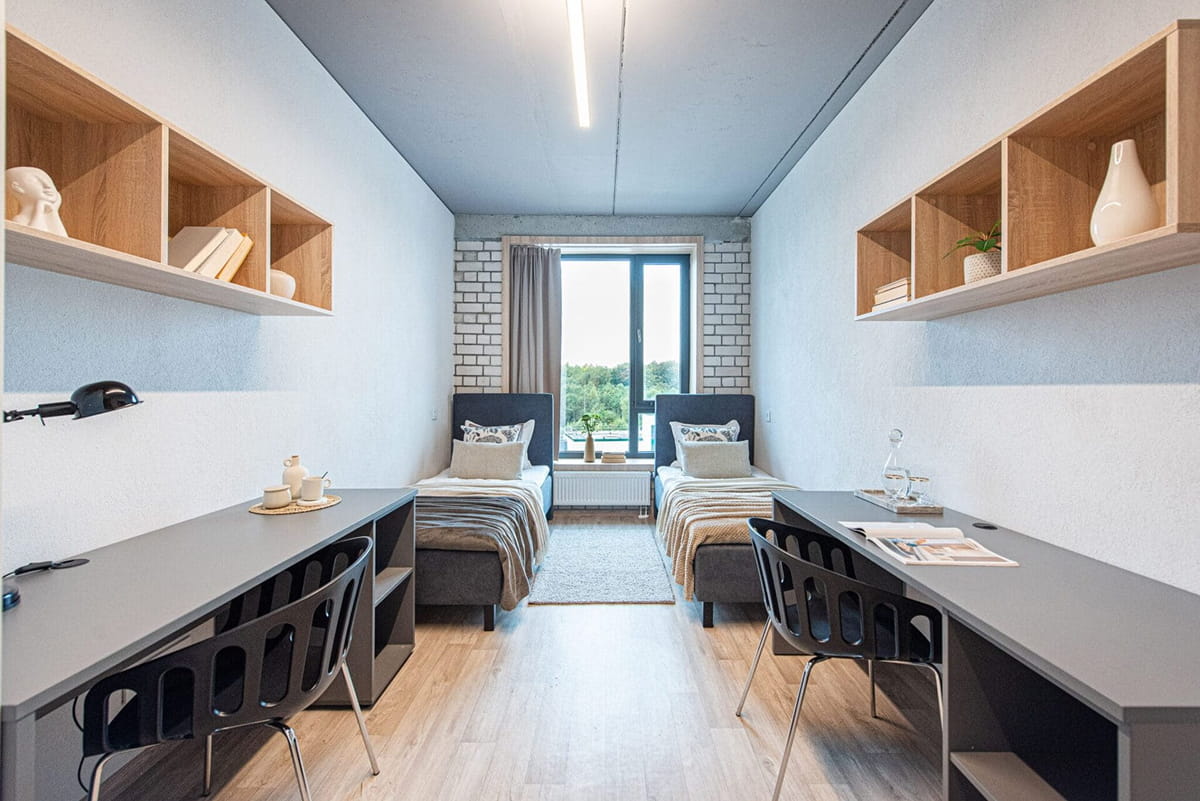
Ask for the room category, floor plan, bed arrangement, floor, approximate dimensions and photographs of the offered category. A twin place, single room and private studio are different products, so the building description cannot replace the room specification in the contract.
4. Verify furniture and kitchen facilities
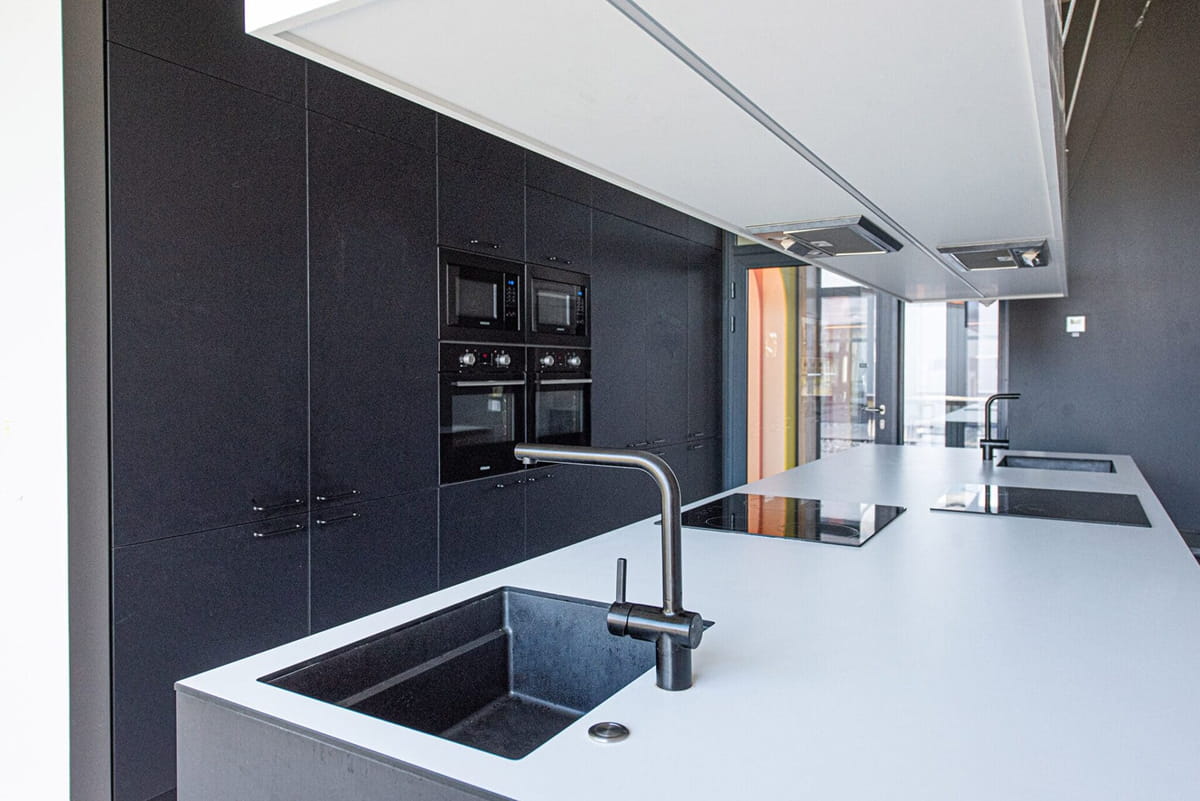
Confirm the bed and mattress, desk, chair, wardrobe, lighting, window coverings and cooking arrangement, together with any inventory supplied at check-in. Fully furnished should mean that normal study and sleep are possible on arrival, not that the resident must immediately buy the basic items missing from a styled photograph.
5. Read the contract dates and cancellation terms
Match the agreement to a semester or full academic year and ask what happens after delayed admission, visa problems or a changed exchange period. Shed Vilnius offers semester and full-academic-year stays subject to availability, but the exact dates and early-departure consequences still belong in the written offer.
6. Test the route to the real teaching building
Use the exact faculty or teaching building—not only the university name—when testing the journey. Vilnius University, VILNIUS TECH and Mykolas Romeris University each use different buildings or campuses, so check the route at the time classes normally begin and again for the evening return. Include walking, waiting and transfers, then compare the weekly time commitment rather than the straight-line distance.
7. Check building access and reception
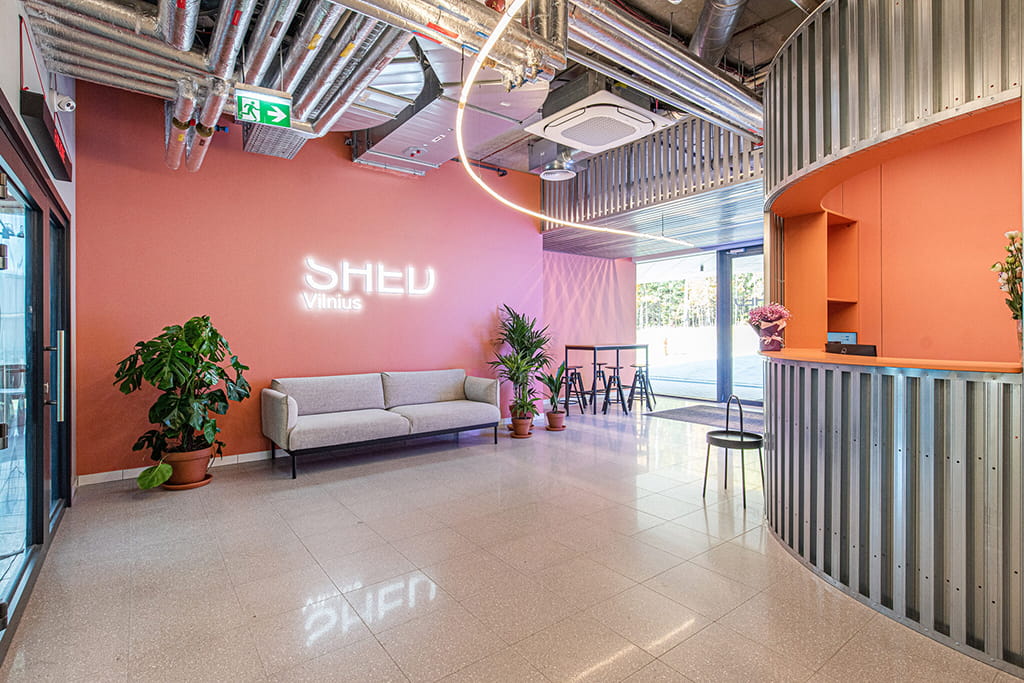
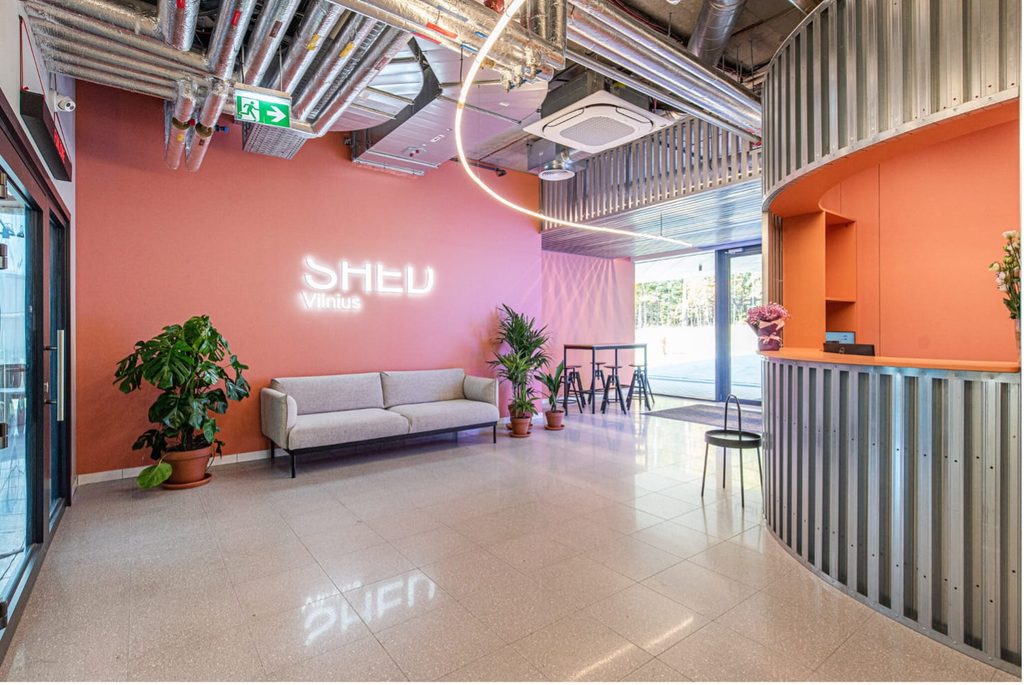
Ask how residents and visitors enter, when reception is available, how urgent problems are reported and what happens after a lost key or late arrival. These procedures do not guarantee safety, but they show whether the building has a functioning support system rather than relying entirely on informal landlord contact.
8. Understand maintenance responsibility
Identify who handles heating, internet, appliances and damage in private and shared areas, then check the expected response channel. A low-cost room becomes frustrating when every repair requires negotiation among a landlord, agency and flatmates, whereas a managed residence should make responsibility easier to identify.
9. Assess study conditions, not only bedroom design
Look for a proper desk, reliable internet, quiet expectations and an alternative place to work when the room feels restrictive. Shared study or co-working areas have practical value during group projects and examinations, provided their hours, access and actual availability match the way the student expects to use them.
10. Decide how much community you want
A dormitory offers immediate university contact, a flat concentrates social life among a few people, and Shed Vilnius combines private accommodation with optional shared facilities and events. Choose the level of interaction that supports rather than distracts from study; community is useful only when participation remains comfortable and voluntary.
11. Discuss accessibility before booking
Describe mobility, sensory or other access requirements to the property and ask about the specific route from entrance to room and shared facilities. A general accessibility statement is not sufficiently precise for an individual need, so confirm the suitable room category and any required arrangement before signing or paying.
12. Verify the provider and payment route
Use the official website or a verified institutional channel, read the complete agreement and match the recipient details to the provider. Do not let scarcity pressure replace due diligence; saving the offer, contract, payment record, cancellation policy and arrival instructions is part of booking accommodation, not an optional administrative extra.
How early should students book for 2026/27?
The room types students prefer most often become unavailable first. Begin with university allocation deadlines, then maintain a private backup that can be confirmed without waiting for the final dormitory result; when requesting an offer, provide the exact arrival and departure dates, preferred occupancy, budget and university so the response is comparable rather than generic.
Can a cheaper option still be the better choice?
Yes. A university dorm can be rational when eligibility is secure and the lowest cost outweighs shared facilities, while a verified flat can suit friends who already understand the local market. Shed Vilnius becomes the stronger choice when cost certainty, privacy, support and ready-made facilities are valuable enough to justify the difference across the entire contract.
How Shed Vilnius answers the practical booking questions
Shed Vilnius offers fully furnished rooms with a private bathroom and kitchenette. For 2026/27, an economy twin place starts at €319 per person per month, while private studios start at €599. Utilities and Wi-Fi are included, so the advertised room price can be compared without estimating separate heating, electricity and internet bills. The offer answers several booking questions at once because furniture, utilities, Wi-Fi, reception and building facilities are part of the same arrangement. The Shed offer can be checked against the same list: exact occupancy, dates, deposit, included bills, optional charges and the facilities available to that room category.
For a student arriving in Vilnius for the first time, the ready-to-use setup removes several jobs from the first week. The room already provides the main furniture needed for everyday living, utilities and Wi-Fi are arranged, and reception gives residents a clear contact for arrival questions and practical issues in the building. That combination is especially valuable when a student is organising registration, classes and a new routine at the same time.
The amenity list is useful because it can be checked against real habits. Study space, fitness facilities and reception have clear everyday purposes, while social areas give residents a way to meet people without depending entirely on flatmates.
The balance between private and shared space is another advantage. A resident can study, cook and rest in the privacy of the room, then use the communal areas when a change of setting or social contact is welcome. This makes the community easier to join without making participation compulsory, which can suit both outgoing students and those who need more quiet during demanding study periods.
The remaining questions belong in the written offer: exact room and occupancy, complete monthly price, deposit, contract dates, cancellation terms and optional services. A student can then compare the promise made online with the agreement that will actually be signed.
The room specification and agreement should identify the occupancy, private and shared facilities, furniture, complete monthly price, deposit and contract dates. Ask for any important promise from a call or message to be added before the agreement is signed. If a detail is missing from the offer, ask for it in writing before sending a deposit or reservation payment.
The first month in Vilnius includes several one-off expenses, such as the deposit, initial rent, travel from the airport or station, bedding and any missing household items. Once the student has settled in, the quality of the room, internet, study environment, maintenance response and ordinary journey become more important.
Compare the first payment, cancellation terms, room privacy and the support available when something breaks. These details often separate two properties with similar monthly totals and attractive photographs, because they determine how easily the student can move in, study and respond when plans change.
Before signing, compare the room description with the agreement line by line. Occupancy, private facilities, furniture, included services and dates should be consistent, and any correction should appear in the final document rather than only in an email conversation.
Keep the room offer, signed agreement, payment record and arrival instructions together so that any question about the room, inclusions or dates can be resolved without searching through separate messages.