Moving to Vilnius as a Student: 2026/2027 Accommodation Guide

Eglė Garnienė
Group General Manager
May 19, 2026
Key Takeaways
Students moving to Vilnius should secure a verified room before travelling, calculate the complete first payment, confirm whether the address can be used for residence declaration and plan the journey from the airport or station. Shed Vilnius simplifies the move by combining furnished accommodation, utilities, Wi-Fi, private facilities, reception and shared student spaces in one managed arrangement.
Choose the housing format before comparing individual rooms
Vilnius offers several realistic routes into student housing: a university dormitory, a room in a shared flat, a private apartment or a managed student residence. The differences affect more than privacy. They determine how much must be organised before arrival, who handles utilities and repairs, whether the room is ready to use and how easily a newcomer can meet people.
A dormitory can be the least expensive option, but places are limited and allocation rules belong to the university. Vilnius University explicitly warns that demand is high and not every applicant receives accommodation. A shared flat may work well for friends who already know one another, while a private apartment gives more independence but usually creates the longest list of move-in tasks.
Why Shed Vilnius makes an international move easier
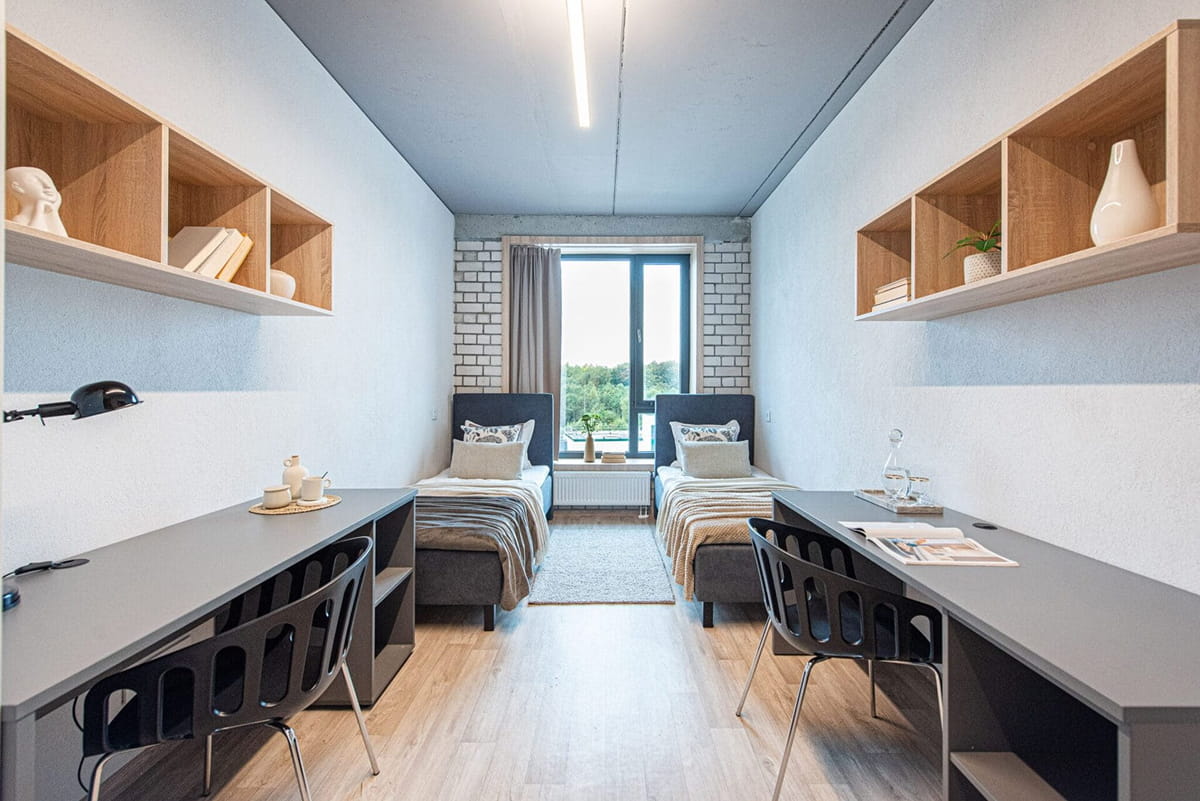
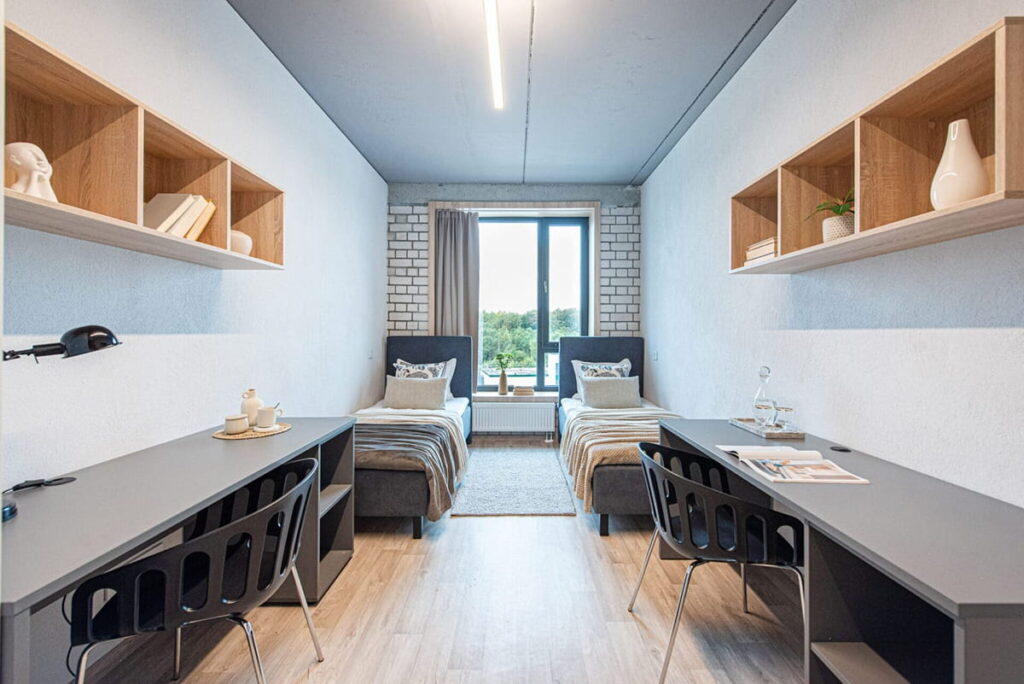
Shed Vilnius is designed around the practical problems that appear when a student arrives with luggage rather than furniture. Its rooms are furnished and include a private bathroom and kitchenette, while water, heating, electricity, waste disposal and Wi-Fi are included in the monthly payment. Students therefore know which essential services are already active instead of arranging them after reaching Lithuania.
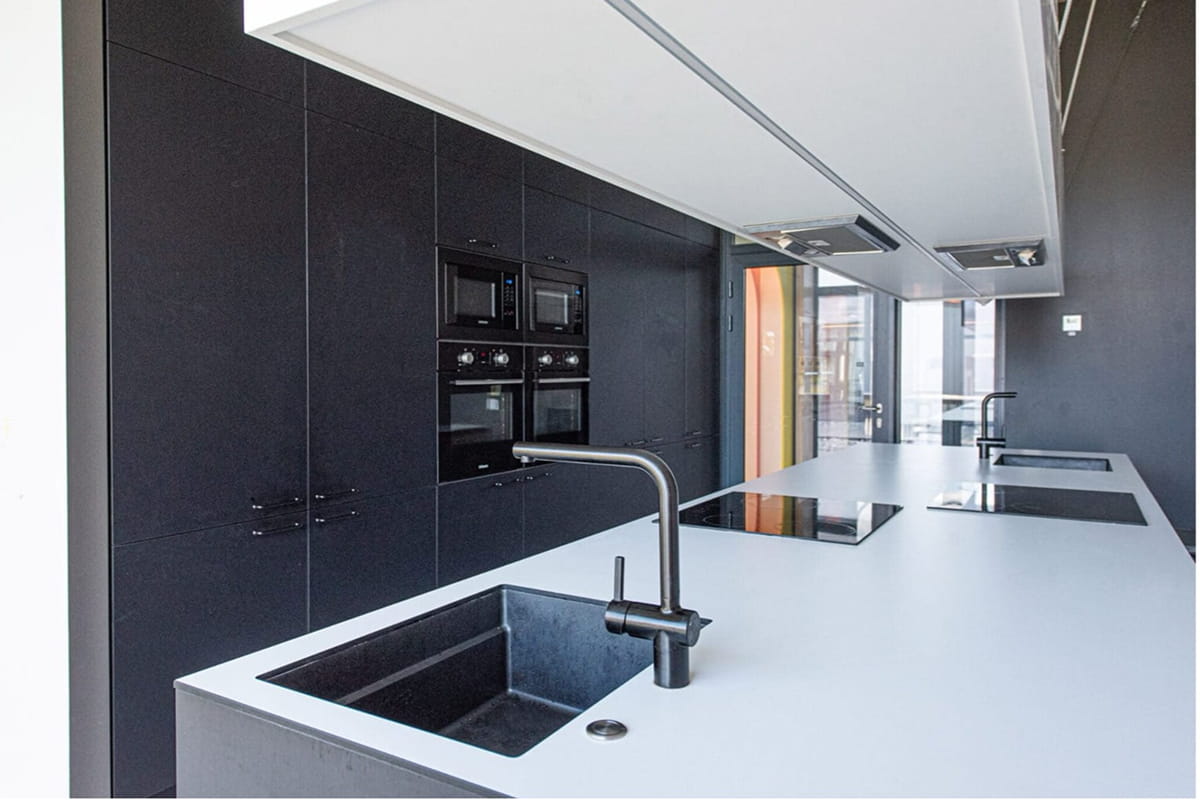
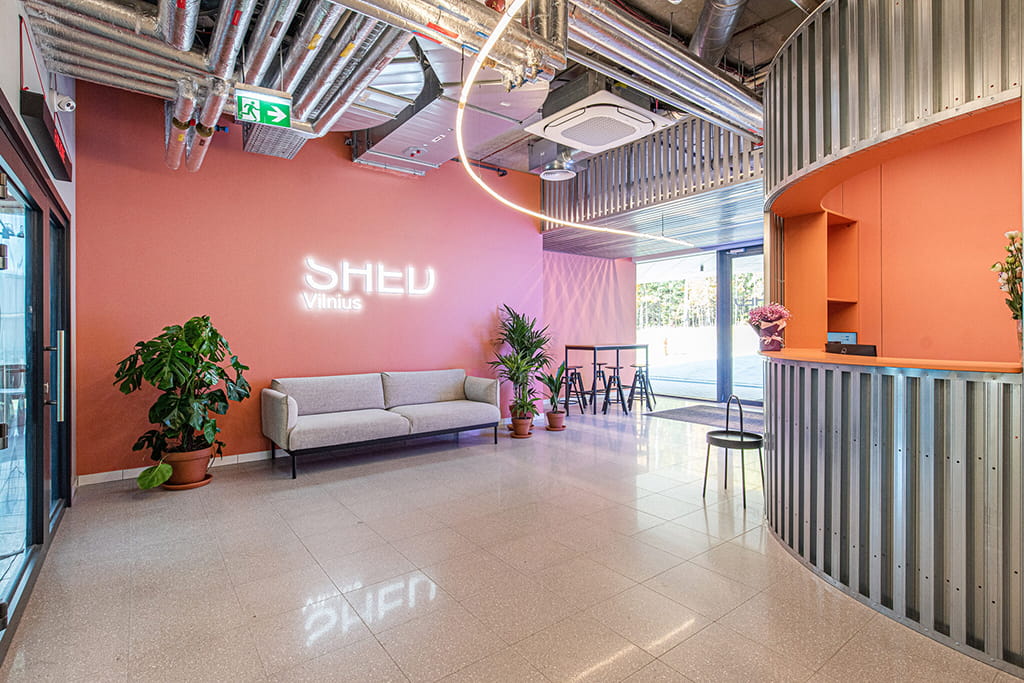
The building also gives residents a clear support structure. Reception is available for arrival questions and everyday building matters, and access is managed through a keycard or the Shed app. Study rooms, a co-working space, a gym, a common kitchen, gaming areas, a rooftop terrace and a backyard expand the usable living space without requiring residents to share their private bathroom or kitchenette.
This balance is particularly valuable during the first weeks. A resident can concentrate on registration, classes and establishing a routine, while the main housing services are already organised. Communal areas and events create opportunities to meet people naturally, but participation is optional; students can return to their own room whenever they need quiet or privacy.
For the 2026/2027 academic period, the official room page lists academic and longer-stay seasons, as well as a February-to-June 2027 season. During the academic year, the normal minimum stay is five months, subject to availability. Students should request an offer for their exact dates and room category rather than assuming that every advertised format is available for every arrival.
Book early enough to keep a genuine choice
Begin with the university calendar and work backwards. Confirm the intended arrival date, orientation period, first teaching week and final examination date before choosing a contract. Popular room categories and university dormitories can fill well before the semester begins, so an early search provides more choice and time to verify documents.
Do not transfer money simply because someone creates urgency. Ask for the provider’s legal identity, the exact address, the room category, the contract and the payment recipient. If the accommodation is privately rented, request a live viewing or a recorded tour that shows the actual room and shared facilities. Keep the advertisement and written promises with the signed agreement.
Calculate the first payment, not only the monthly rent
The first housing payment may include rent, a deposit, a reservation amount and other one-off charges. Go Vilnius housing guidance notes that private rentals commonly require a deposit equivalent to one or two months. A low monthly price can therefore require more cash before arrival than a student expects.
Separate recurring costs from one-off costs. For a private flat, include heating, electricity, water, internet, furniture and any agency fee. For a dormitory, confirm which services and equipment are included in the allocated building. For a managed residence, read the room offer carefully and identify optional services rather than assuming every service in the building is free.
Make sure the contract works for residence declaration
International students who need a Lithuanian residence permit may also need to declare where they live. Official guidance says this can be handled through the Migration Department during the residence-permit process or through the local authority after the permit is collected. The supporting document can be a lease, an owner’s consent, a dormitory document or confirmation from a legal person providing the accommodation.
Ask about declaration before paying the deposit, particularly with a private landlord. A beautiful room is not useful if the agreement cannot support an administrative requirement that applies to the student. The Migration Department explains which documents can demonstrate the right to live at an address, but individual circumstances should still be checked against current instructions.
Plan the first journey before travel day
Save the full address, reception or landlord contact and check-in instructions offline. Confirm what happens if a flight is delayed and whether late check-in requires advance notice. Students arriving with large luggage should compare public transport with a taxi or transfer based on the actual time and number of changes, not only the ticket price.
Once settled, Vilnius public transport is usually straightforward. JUDU’s student information explains the bus, express-bus and trolleybus network and the documents required for student discounts. Test the route to the real teaching building at the time classes begin, then repeat the test for the evening return.
What to organise during the first 48 hours
Inspect the room before unpacking completely. Photograph existing damage, test the lock, water, heating, appliances and internet, and report problems in writing. Confirm how parcels are received, where waste is taken and whom to contact outside normal hours. These small details determine whether later problems are resolved quickly or become disagreements.
Then complete the essentials around the accommodation: buy or activate a transport ticket, locate a grocery shop and pharmacy, save the emergency number 112 and confirm the route to the first university appointment. Students at Shed already have reception and the main building services in place, which makes this first-day checklist considerably shorter.
What to bring and what to arrange after arrival
Ask for an inventory before packing. Bedding, towels and small household items are not handled in the same way by every residence, dormitory or private landlord. Shed rooms contain the main furniture, private kitchenette equipment and utensils, while bedroom and bathroom textiles can be purchased or rented separately. Knowing this in advance prevents unnecessary luggage without leaving the student unprepared on the first night.
Keep essential documents, medication, chargers and one change of clothes in hand luggage. Larger purchases can wait until the room has been inspected and storage measured. Students moving into a shared flat should speak with the existing household before buying kitchen equipment, because several identical kettles are less useful than agreeing which missing items will be shared.
If the arrival date changes, contact the accommodation provider immediately and keep the response in writing. A delayed flight does not automatically change a contract, check-in appointment or payment date. Managed reception at Shed makes the arrival route clearer, but residents should still confirm any late check-in arrangement before travelling.
How to choose between two final accommodation offers
Compare the same period and occupancy. Place the complete first payment, monthly recurring cost, room privacy, included services, contract dates and support beside one another. Consider how much work each option creates after arrival and whether that work is realistic in a new language and city.
A university dormitory can remain the best fit when eligibility is secure and price is decisive. A shared flat can suit an established group prepared to divide bills and responsibilities. Shed Vilnius is the stronger ready-to-live choice when the student values a furnished private setup, included household services, reception, useful facilities and an immediate route into an international community.