Where Do Erasmus and Exchange Students Live in Vilnius? 2026/2027 Area Guide

Eglė Garnienė
Group General Manager
March 25, 2026
Key Takeaways
The best area for a student in Vilnius depends on the exact faculty, the evening journey and the type of accommodation available on that street. Shed Vilnius gives international students a furnished, supported base with included bills and an immediate community, while university dormitories and shared flats can work better for students prioritising the lowest rent or a different part of the city.
The options at a glance
| Option | Best fit | Cost pattern | What to verify |
|---|---|---|---|
| 1. Shed Vilnius | Best overall | Twin places from €319 per person; private studios from €599 | Furnished, all-inclusive and community-led; semester or academic-year stays. |
| 2. Solo Society City House | Central station-area living | Prices vary by room and dates | Furnished studios in a hybrid student/hotel format. |
| 3. MRU Student House | MRU students on a budget | From EUR120 per bed | Very low cost; eligibility and shared facilities apply. |
| 4. Vilnius University dormitories | Eligible VU students | University-set fees | Budget campus housing with limited inventory. |
| 5. VILNIUS TECH dormitories | VILNIUS TECH students | Varies by building | Campus-oriented shared housing. |
How to choose an area
In Vilnius, the most fashionable district is not necessarily the most useful student base. Campus geography, evening transport, food shopping and winter travel matter more over a semester than a single central landmark. Check the surrounding streets at the times you expect to leave for class and return after study or social plans.
For each area below, check the exact street. Two addresses in the same district can have very different tram, bus, noise and lighting conditions.
1. Santariskes / Shed Vilnius
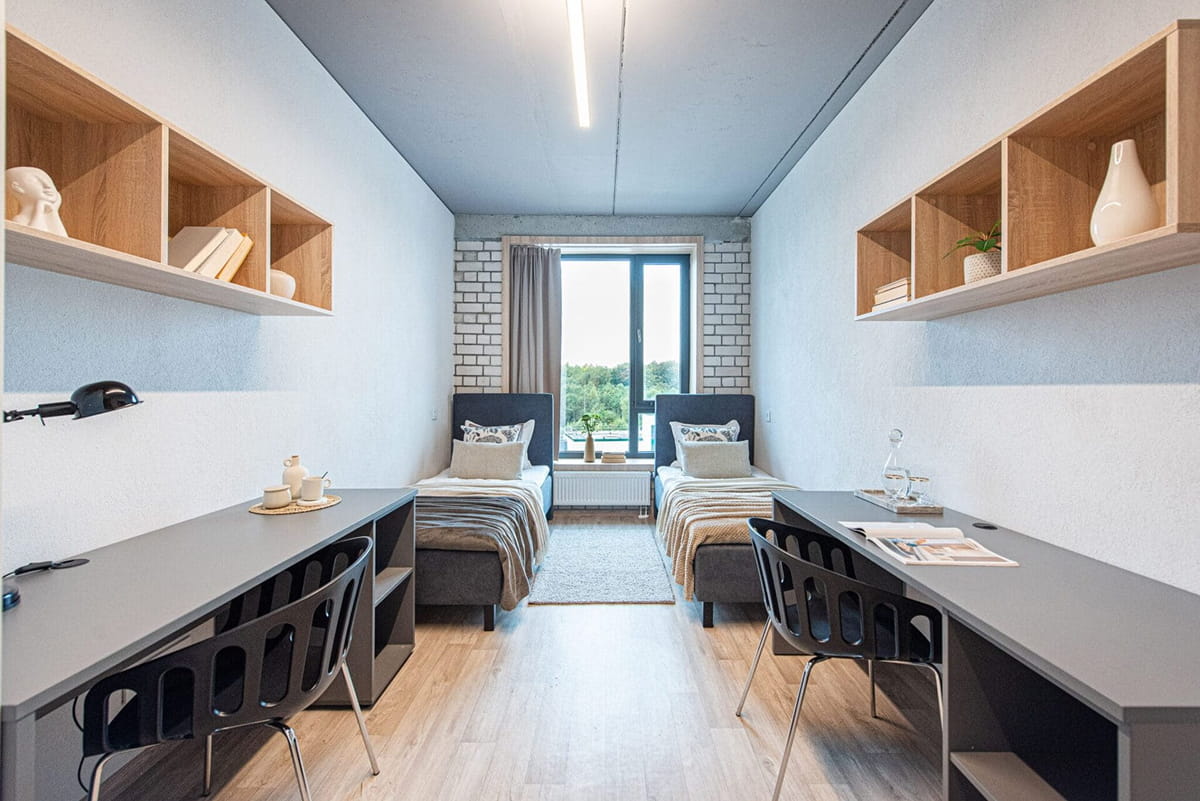
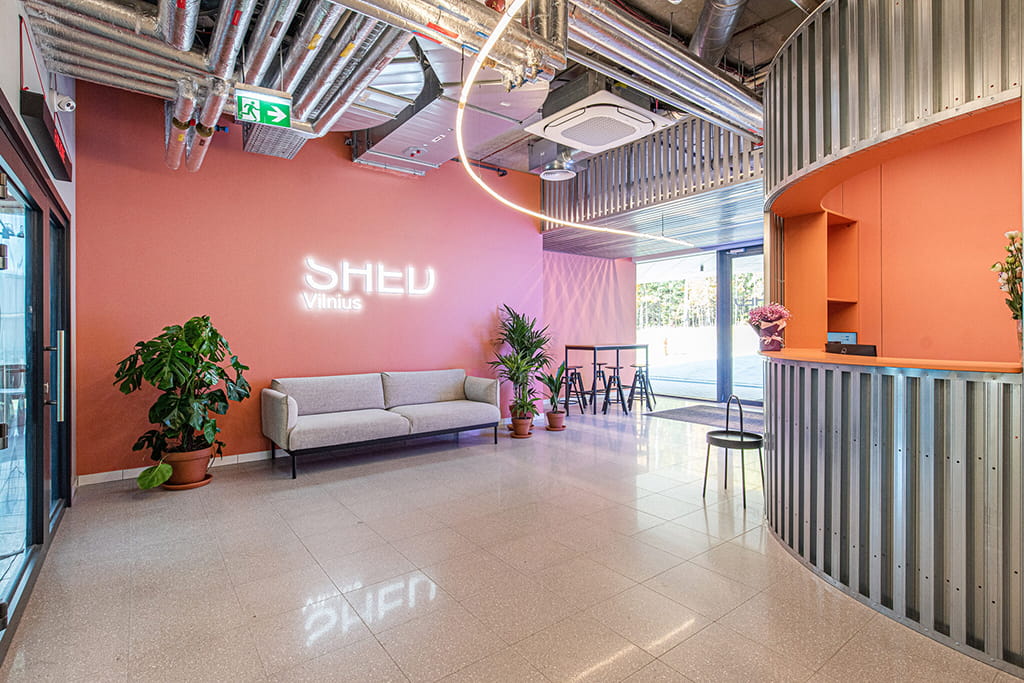
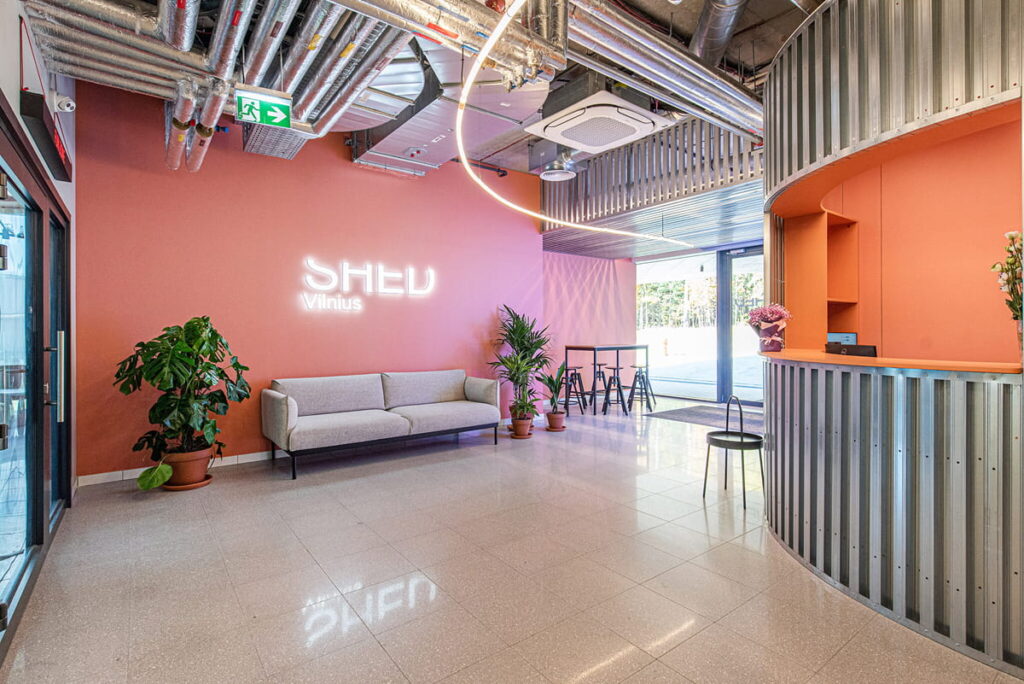
Shed Vilnius gives Erasmus and exchange students a ready-made base for the semester or academic year. Rooms are furnished and include private bathroom and kitchenette facilities, while utilities and Wi-Fi are part of the accommodation package. Reception support makes check-in and practical questions easier when a resident is still learning how the city works.
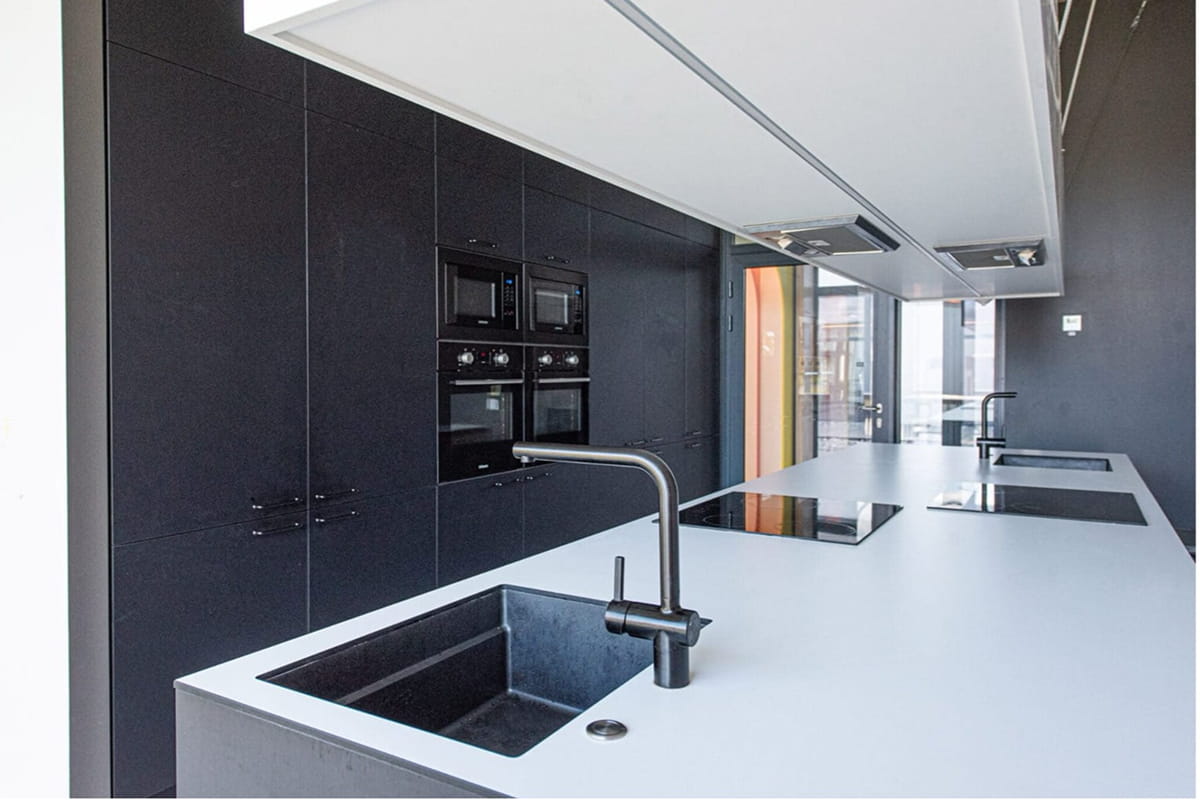
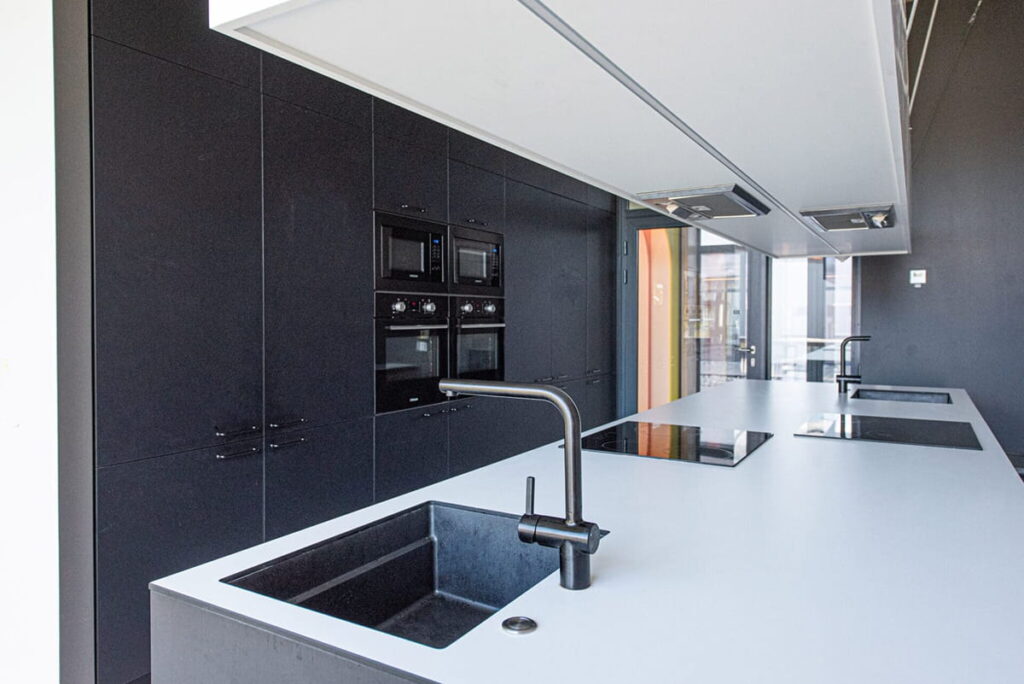
The shared areas help students build a routine beyond the room. Study spaces are useful when coursework requires focus, fitness facilities make exercise accessible, and lounges create low-pressure opportunities to meet other residents. Because each student retains private space, joining the community remains a choice rather than a requirement.
For a short international stay, the reduced setup work is a significant advantage. Students do not need to furnish a rental, arrange internet or divide household accounts with people they have only just met. They can arrive, settle in and use the building immediately, which leaves more time for classes, friendships and exploring Vilnius.
Ready-to-live furnished studio with included bills and shared facilities.
2. Sauletekis
This area can be a strong fit when its transport lines serve your faculty directly. Compare a residence, a university room and a verified flatshare before assuming one format is cheaper.
3. Naujamiestis and the station area
Central connections, nightlife access and a growing mix of private rentals and hybrid residences.
4. Old Town and Centre
Walkable city life, but typically higher prices, smaller rooms and more visitor noise.
5. Zirmunai
A residential compromise with river access and useful bus links to several parts of the city.
What to compare before choosing an area
Open a map with your actual faculty building, supermarket and preferred evening route. If two areas have similar rent, favour the one with fewer changes and a more dependable late return.
Shed Vilnius reduces move-in work by combining furniture, included bills and building support. A central flat can win for walkability, while campus housing wins when lectures and budget dominate the choice.
Where Erasmus students meet people
A central district makes spontaneous city life easier, while a residence creates repeated contact with the same group of people. Students arriving alone may value shared kitchens, study rooms and events, whereas an established group may prefer a private flat.
For Erasmus students, the appeal lies in having a furnished private space, included bills, practical support and opportunities to meet other residents from the day they arrive.
Do students choose an area or a housing format first?
Students seeking the lowest eligible price often begin with university dormitories, while those prioritising privacy look first at studios and established groups consider shared flats. Once the housing format is clear, the neighbourhood choice can focus on the routes and services that matter each week.
How should the university route be tested?
Which locations suit a one-semester exchange?
A short stay increases the value of furniture, predictable bills, remote booking and immediate social contact, which is why Shed Vilnius is especially relevant for Erasmus arrivals; a local-style flat can still work, but only when the contract dates, deposit return and responsibility for household accounts are clear before travel.
A route test that reflects an ordinary academic week
Build the comparison around three recurring journeys in Vilnius: the earliest class, the latest return and the least convenient faculty, hospital or laboratory used during the week. Record walking, transfers and waiting rather than relying on the map’s fastest theoretical result, because a location that performs consistently across those journeys will usually support student life better than an address chosen for its generic central reputation.
Add groceries, a pharmacy and the preferred evening transport stop to the route comparison. This shows whether the location supports the student’s full weekly routine rather than only the journey to class.
How Shed Vilnius supports an international arrival
Shed Vilnius offers fully furnished rooms with a private bathroom and kitchenette. For 2026/27, an economy twin place starts at €319 per person per month, while private studios start at €599. Utilities and Wi-Fi are included, so the advertised room price can be compared without estimating separate heating, electricity and internet bills. For an Erasmus arrival, furniture, one monthly payment and an established resident community reduce the number of decisions that must be made from abroad. Location becomes easier to judge when the housing package is held constant, so compare Shed with alternatives offering the same privacy, contract period and included services.
For a student arriving without a local network, shared study and social spaces offer natural opportunities to meet people. Participation remains optional, and the private room makes it possible to step away when work or rest takes priority.
A semester contract can suit an exchange calendar more closely than a conventional twelve-month lease. The individual offer should state the exact dates, room category, deposit and cancellation terms before travel is booked around it.
How to choose between two areas in Vilnius
Start with the address used most often during the week: the faculty building, hospital, laboratory or placement site. Compare a normal morning journey and an evening return, including the walk and every transfer, then look at groceries, study space and the streets immediately around the property. This turns a broad neighbourhood name into a realistic weekly routine.
After the route works, compare the accommodation itself. A cheaper room may be shared or exclude utilities, while a higher price may include private facilities, furniture, internet and building support. The better area is the one that still fits the budget and living preferences after those differences are made visible.
The written offer should confirm the exact address, room, occupancy, complete price and contract dates. Once those details are fixed, the student can test the real weekly route in Vilnius without comparing a precise journey with a vague housing promise.
The first month in Vilnius includes several one-off expenses, such as the deposit, initial rent, travel from the airport or station, bedding and any missing household items. Once the student has settled in, the quality of the room, internet, study environment, maintenance response and ordinary journey become more important.
The available room matters as much as the building. Occupancy, floor area, storage, bed arrangement and private or shared facilities can change the daily experience even when two offers come from the same residence.
Include the evening routine in the location decision
An exchange student’s week often continues after the last lecture. Language classes, society events, groceries and social plans can finish when transport is less frequent, so the return journey deserves the same attention as the morning trip. A location that remains easy to reach in the evening can feel more convenient than one that looks closer on a daytime map.
Orientation week, regular teaching and examinations create different travel patterns. A useful location supports all three: it offers an easy arrival, dependable weekday journeys and access to study space and groceries when social events become less frequent.
A preliminary route test is useful, but the final timetable may introduce a different faculty building or a late class. Repeat the comparison once the schedule is available and include the return journey as well as the morning trip.