Co-Living vs Dormitory vs Shared Flat for Students in Vilnius: 2026/2027 Comparison

Eglė Garnienė
Group General Manager
June 26, 2026
Key Takeaways
Co-living offers the strongest combination of private space, included services and optional community; a university dormitory normally provides the lowest eligible price, while a shared flat gives a small household more independence but also more responsibility. At Shed Vilnius, students have furnished private facilities, included utilities and Wi-Fi, reception and shared study, fitness and social spaces.

The housing formats at a glance
| Factor | Co-living | Dormitory | Shared flat |
|---|---|---|---|
| Privacy | Private room facilities | Often shared | Private bedroom; shared home |
| Bills | Usually bundled | Depends on institution | Usually divided separately |
| Support | Managed reception | University rules and staff | Landlord and flatmates |
| Community | Optional building-wide | Immediate student environment | Small household |
| Availability | Open booking by room | Eligibility and allocation | Private-market search |
The three formats solve different student problems
Co-living, dormitories and shared flats are sometimes compared as though they were different versions of the same bedroom. In practice, they organise everyday life differently. The choice affects who manages the building, how bills are paid, which spaces are private and how much the resident depends on other people in the household.
The best fit therefore depends on more than sociability. A student may enjoy meeting people but still need a private bathroom and quiet study space. Another may accept shared facilities because the lowest cost is essential. A group of friends may prefer control over an ordinary apartment even though they must divide utilities and deal with the landlord themselves.
Co-living at Shed Vilnius: privacy with a community available
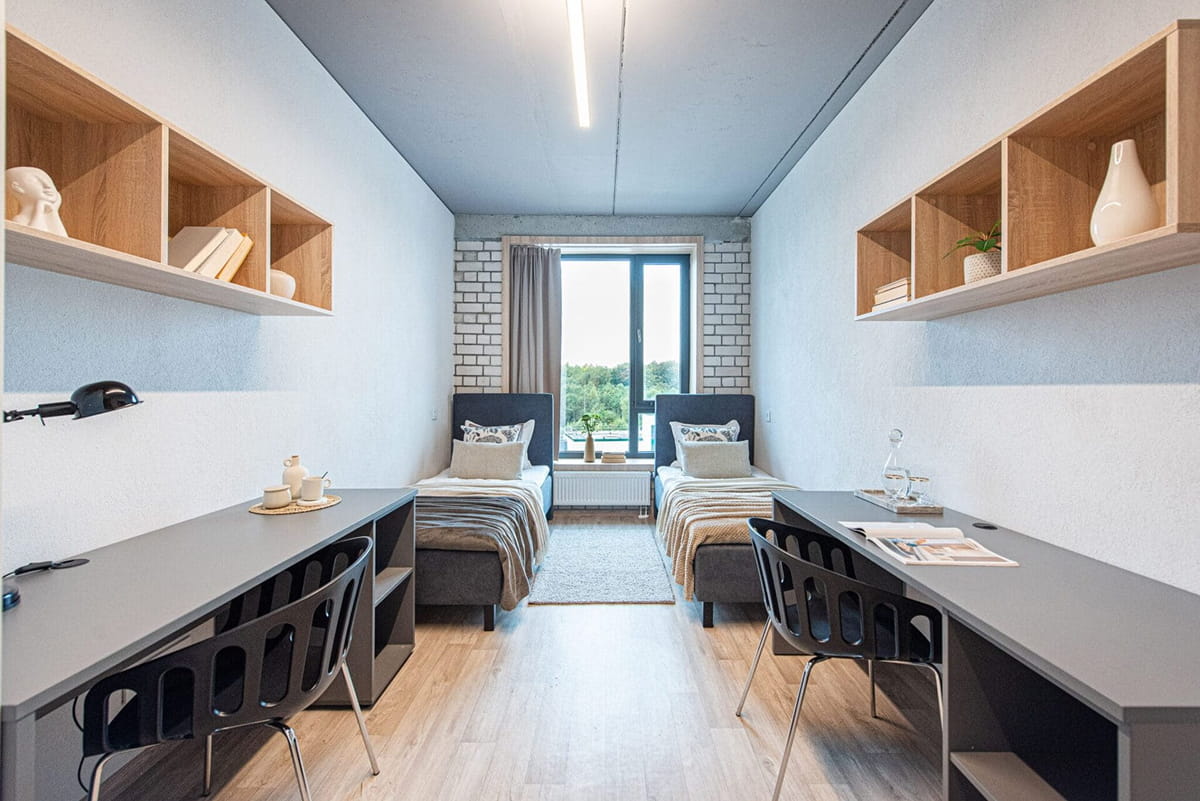
Shed Vilnius gives students a furnished room with private bathroom and kitchenette facilities, so the most personal parts of the daily routine do not depend on a corridor bathroom or a shared cooking schedule. Water, heating, electricity, waste disposal and Wi-Fi are included in the monthly payment, which also makes the recurring cost easier to understand.
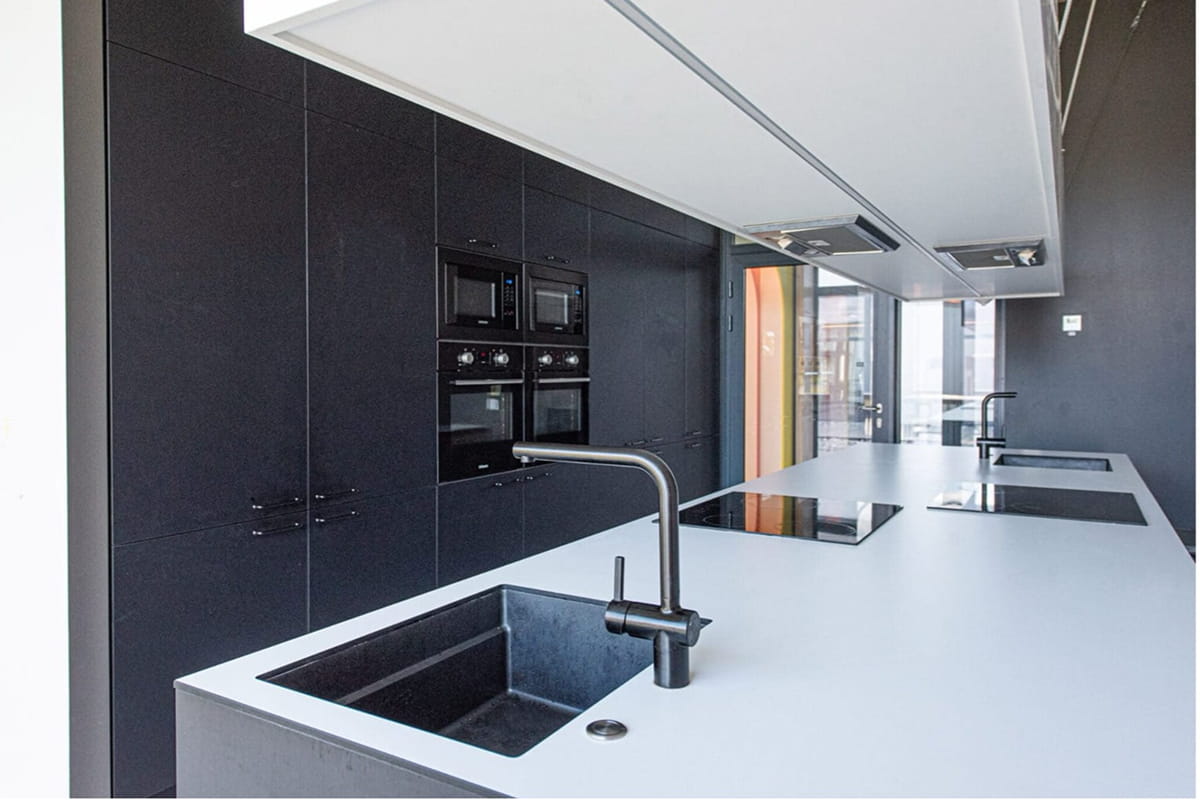
The communal side begins beyond the room. Residents can use study rooms, co-working areas, a gym, a common kitchen, gaming spaces, a rooftop terrace and a backyard. Events and shared spaces make it easier to recognise neighbours and develop friendships, but the resident decides when to take part. Privacy remains available without withdrawing from the building entirely.
Reception, on-site staff and managed access provide a clearer support structure than most shared flats. When an access credential, parcel or maintenance issue needs attention, the resident has an accountable contact in the property. This is especially useful for an international student who may not yet know which local service or person should handle a problem.
Co-living costs more than many university dormitory beds, but it is a different product. The price covers private facilities, furnished accommodation, core household services and a wider set of spaces. Its value is strongest when a student wants to arrive with fewer tasks, use the building regularly and retain control over when to be social.
University dormitories: low cost and immediate student life
Dormitories are usually the budget-first choice. They provide an immediate student environment and are allocated through the university, which can make the route from application to accommodation feel straightforward. The trade-off may be shared occupancy, shared bathrooms or kitchens, older facilities and institutional rules.
Availability is not guaranteed. Vilnius University states that it cannot accommodate every applicant, while MRU and VILNIUS TECH use their own application, building and room arrangements. Students should compare the confirmed room rather than the best room shown on a general dormitory page.
A dormitory suits students who qualify, accept the allocated facilities and place the lowest monthly housing cost above privacy or extensive amenities. It can also be a strong social environment, although the quality of that experience often depends on roommates and the rules of the specific building.
Shared flats: a small household with more responsibility
In a shared flat, each student may have a private bedroom while the kitchen, bathroom and living room belong to the household. The arrangement can feel more like ordinary city life and works particularly well when residents already know one another. It can also provide more control over guests, meals and the atmosphere of the home.
The same independence creates work. Flatmates need to divide electricity, heating, internet and cleaning, agree on visitors and quiet hours, and decide what happens when someone leaves. The landlord may manage repairs, but one resident often becomes the person who communicates on behalf of everyone.
A shared flat can be affordable when the rent and utilities are divided among reliable people. It becomes less predictable when heating varies, furniture is missing or a departing tenant must be replaced quickly. Ask for recent bills, inspect the actual bedroom and make sure every resident’s position is clear in the contract.
Which format provides the most privacy?
A private bedroom alone does not settle the privacy question. Consider the bathroom, kitchen, entrance, study environment and control over guests. Shed offers private bathroom and kitchenette facilities inside the furnished room, while the larger study and social spaces are shared. A dormitory may require more sharing, and a flat normally keeps the bedroom private but places household routines in the hands of a small group.
Students who need quiet should ask about room occupancy, walls, study areas and quiet-hour rules. Those who enjoy company should still consider whether they want social contact across an entire residence or mainly with two or three flatmates. The right amount of privacy is the level that supports ordinary study and rest, not the most isolated option available.
How do the complete costs compare?
Dormitories usually win on headline price. A shared flat may sit between a dormitory and co-living, although winter utilities, internet, furniture and deposits can change the result. Co-living normally has a higher monthly price, but more services and facilities are already included.
Compare identical dates and occupancy. Add every mandatory charge, the first payment and realistic transport cost. Then identify which facilities would replace spending elsewhere. At Shed, included utilities and Wi-Fi reduce monthly variation, while the gym, study areas and communal rooms can provide real value to residents who use them.
Which format is easiest for an international arrival?
Co-living is usually the simplest because the room, furniture, services and support are organised through one provider. Shed residents arrive to a functioning private space and can ask reception about building matters. The community is already present, so meeting people does not depend on finding compatible flatmates before travelling.
A university dormitory can also provide a clear arrival route once a place is allocated, but students must follow institutional dates and procedures. A shared flat requires the most independent verification: landlord identity, contract, payment, room condition, utilities and the expectations of the existing household.
What changes during an ordinary study week?
The practical differences become clearer after the first excitement of moving in. In a dormitory, shared facilities and roommate routines shape sleep, cooking and study. In a flat, a small group negotiates cleaning, shopping and guests. At Shed, the resident can handle personal routines inside the room and use the larger communal spaces when a different setting or company is helpful.
Maintenance follows the same pattern. Dormitory residents use the university’s process, flatmates contact a landlord and co-living residents report issues through the managed building. Students should consider which arrangement they can rely on during examination periods, when a broken appliance or unstable internet connection is more than a minor inconvenience.
How to choose between co-living, a dormitory and a flat
Choose a dormitory when the allocated place is suitable and keeping the housing payment as low as possible matters most. Choose a shared flat when the residents are dependable, the complete bills are known and the household wants more control. Choose co-living when private facilities, predictable inclusions, managed support and access to a wider community are worth the higher monthly price.
For many students arriving from abroad, Shed Vilnius provides the most balanced transition: the room supports independent daily life, the shared spaces prevent isolation and reception reduces uncertainty when something practical needs attention. The final decision should still use the exact room, dates and written offer, because the format only becomes meaningful when those details fit the student’s real semester.