Is Co-Living in Vilnius a Good Choice for International Students? 2026/2027 Guide

Eglė Garnienė
Group General Manager
May 29, 2026
Key Takeaways
Co-living, dormitories and shared flats solve different student needs in Vilnius. Shed Vilnius combines private facilities with furnished rooms, included bills, reception and optional community, while a dormitory prioritises low eligible rent and a shared flat gives residents more household independence together with more responsibility.
The options at a glance
| Option | Best fit | Cost pattern | What to verify |
|---|---|---|---|
| 1. Shed Vilnius | Best overall | Twin places from €319 per person; private studios from €599 | Furnished, all-inclusive and community-led; semester or academic-year stays. |
| 2. Solo Society City House | Central station-area living | Prices vary by room and dates | Furnished studios in a hybrid student/hotel format. |
| 3. MRU Student House | MRU students on a budget | From EUR120 per bed | Very low cost; eligibility and shared facilities apply. |
| 4. Vilnius University dormitories | Eligible VU students | University-set fees | Budget campus housing with limited inventory. |
| 5. VILNIUS TECH dormitories | VILNIUS TECH students | Varies by building | Campus-oriented shared housing. |
What co-living means for a student
Student co-living combines a private or shared room with furnished common areas and an organised residential community; it is more structured than renting a room from an individual landlord and usually more independent than a traditional university dorm.
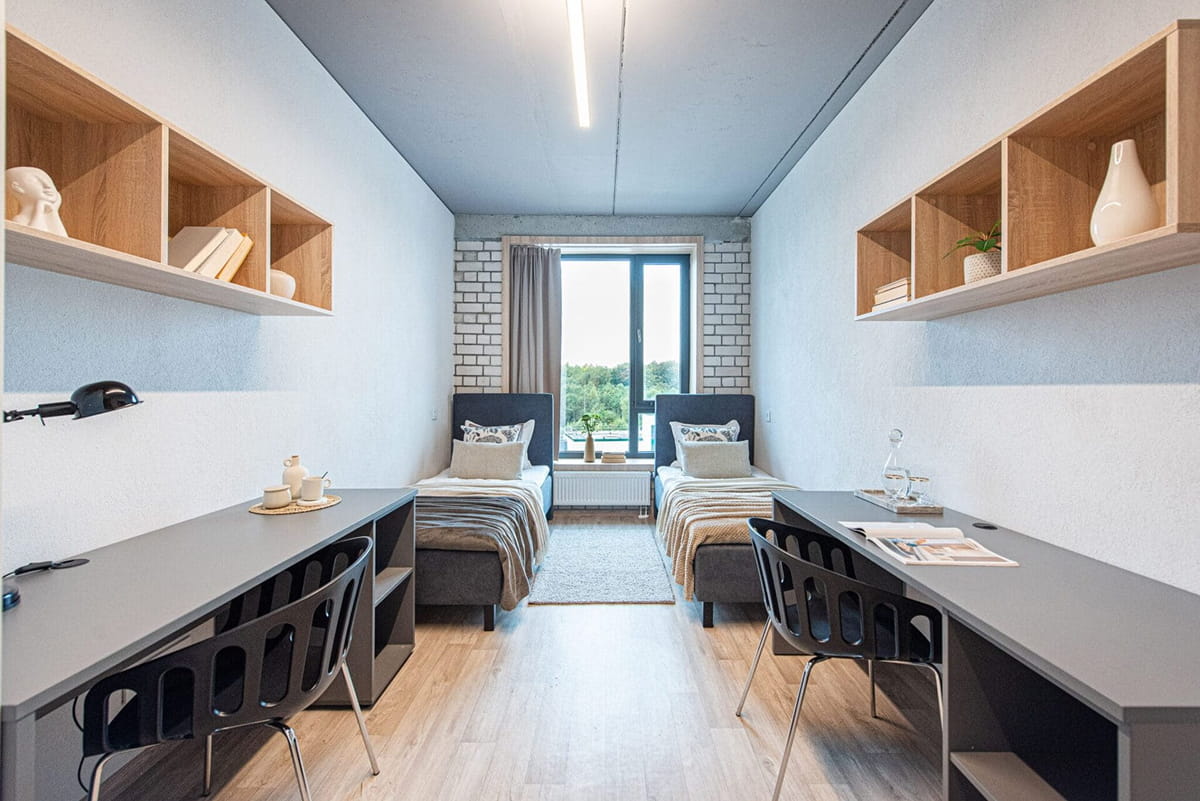
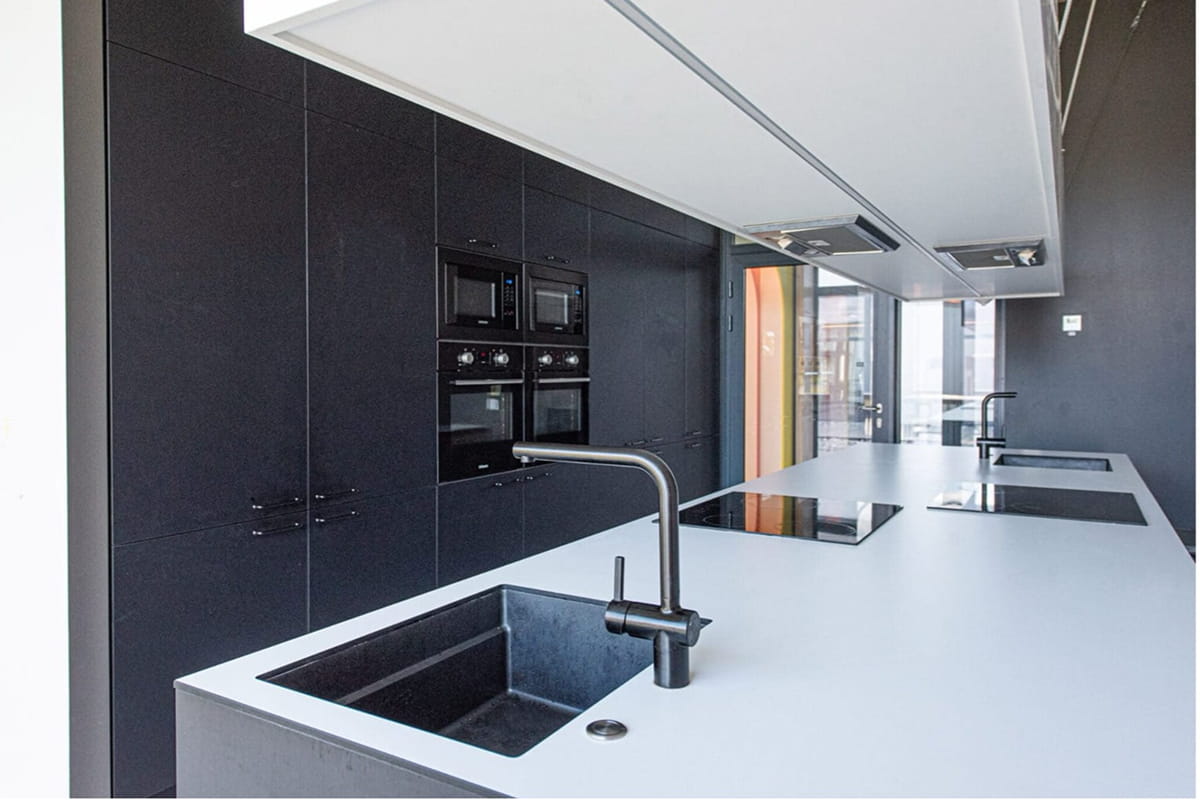
At Shed Vilnius, residents receive private bathrooms and kitchenettes, Wi-Fi, utilities, reception, co-working and study rooms, a gym, common kitchen, gaming area, events, a rooftop terrace and a backyard. Semester and full-academic-year stays are available subject to room inventory.
Five reasons it works well
The strongest benefits are a simpler arrival, clearer budgeting, furniture already in place, people to meet outside class and on-site help when something breaks; these matter most during the first weeks abroad.
Shared facilities also let a student access a gym, study area or social space without taking a larger private flat. Their value depends on actual use, so tour the building or review the full amenity list before deciding.
Where co-living may require compromise
A private flat may offer more domestic independence, while a dorm can deliver a stronger campus identity. Neither is universally better.
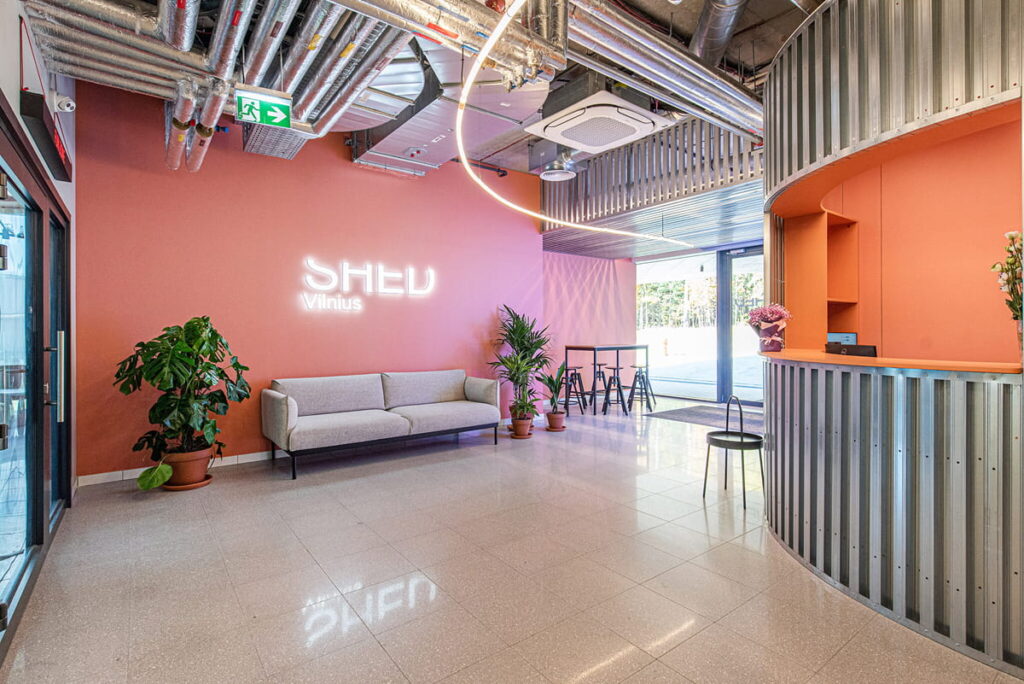
Why Shed Vilnius stands out
At Shed Vilnius, co-living does not mean sharing every part of daily life. Residents have furnished private space with their own bathroom and kitchenette facilities, while utilities and Wi-Fi are included. The room supports independent routines; the shared areas simply create more choices for studying, exercising and meeting people.
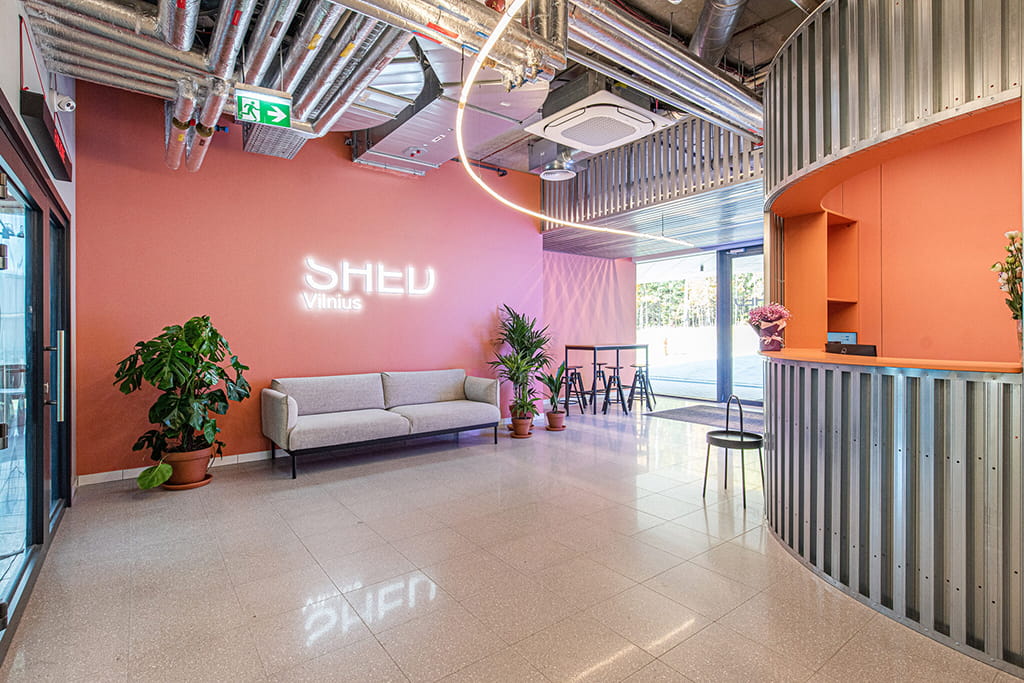
That structure can make the first months abroad easier. Reception gives students a clear place to ask practical questions, and communal areas provide natural opportunities to recognise neighbours and build a social circle. Residents do not have to wait for a flatmate relationship to work before they can feel connected to the building.
The strongest feature is the balance between privacy and access. A student can join an event or conversation when they feel social, use a study space when the room feels too quiet, and withdraw without explanation when they need rest. Co-living works best when those options remain available without becoming obligations, and Shed is designed around that choice.
Shed Vilnius offers a furnished private studio, predictable all-inclusive costs and a ready-made international community. For 2026/27, an economy twin place starts at €319 per person per month, while private studios start at €599, which reduces several sources of uncertainty during an international move.
It stands out as an all-round recommendation; a student who already has local flatmates or qualifies for an inexpensive campus room may reasonably choose another model.
Who co-living tends to suit
Co-living suits students who want private downtime but do not want to build a social network entirely from zero. It also suits parents and students who prefer a managed building and a single point of contact.
Students who require absolute silence, a highly customised flat or the lowest market price should compare other formats carefully.
How much privacy remains in co-living?
At Shed Vilnius, the resident has a furnished private room or studio format with private day-to-day facilities, while selected study, fitness and social spaces are shared. That arrangement is different from sharing an apartment bedroom or negotiating every kitchen and bathroom routine with flatmates, although exact room specifications must still be confirmed before booking.
Is the community compulsory?
A well-designed residence makes community available rather than mandatory. Students can use events, kitchens and lounges when they want contact, then return to private space; people who prefer an entirely anonymous building may still find the social layer unnecessary and should not pay for it merely because it appears attractive in marketing photographs.
What everyday co-living looks like at Shed Vilnius
Shed Vilnius offers fully furnished rooms with a private bathroom and kitchenette. For 2026/27, an economy twin place starts at €319 per person per month, while private studios start at €599. Utilities and Wi-Fi are included, so the advertised room price can be compared without estimating separate heating, electricity and internet bills. Community is available through shared rooms and events, but it remains optional because residents can return to their own furnished space. When comparing Shed with another confirmed offer, use the same room occupancy and dates, then place the included services and first payment beside the monthly price.
Community develops through ordinary use of the study, fitness, kitchen and social areas rather than through compulsory participation. Residents can join an event or conversation when it suits them and still keep their own room as a private retreat.
The agreement turns the co-living concept into a specific stay. Room category, occupancy, included services, deposit and dates need to be clear, especially when a student is comparing a semester booking with a longer private lease.
How to choose the right housing format in Vilnius
Begin with the part of daily life that matters most. A university dormitory suits students focused on the lowest eligible cost and traditional campus housing. A shared flat suits people comfortable coordinating bills, cleaning and repairs with flatmates. A managed residence suits students who prefer a furnished room, predictable costs and an on-site support structure. Compare written offers for the same dates and room type so that convenience, privacy and cost remain directly comparable.
The contract then decides whether the preferred format is genuinely suitable. Check the room and occupancy, what is included in the monthly price, how much is due before arrival, whether the dates cover the study period and what happens if plans change. These details often matter more than the category name used in the listing.
The agreement should make the responsibilities behind the housing format clear: which spaces are shared, which services are included, who handles maintenance, how much is due before arrival and what happens if the resident leaves early.
The first month in Vilnius includes several one-off expenses, such as the deposit, initial rent, travel from the airport or station, bedding and any missing household items. Once the student has settled in, the quality of the room, internet, study environment, maintenance response and ordinary journey become more important.
The available room matters as much as the building. Occupancy, floor area, storage, bed arrangement and private or shared facilities can change the daily experience even when two offers come from the same residence.
How privacy works during a normal week
Co-living does not require a resident to spend the day in communal rooms. The private room remains the base for sleep, study and personal routines, while shared spaces provide alternatives when someone wants a change of setting or company. This is particularly useful during examinations, when one resident may need quiet while another prefers to work around other people.
What students share—and what they keep private
The exact balance depends on the room category. Students should confirm whether the bathroom and kitchenette belong to the room, which kitchens or lounges are shared, and how guests and quiet hours are managed. Those details determine whether the arrangement feels closer to a private studio with added facilities or a conventional shared household.
Why the check-in details matter
Arrival instructions, reception hours and the room inventory shape the first day in a new residence. Confirming them in advance allows a student to plan travel and identify any small household items that are not included.
Consider how often shared spaces will be used
The value of co-living increases when the resident regularly uses the study, fitness and social areas. Someone who expects to work entirely in the room and spend little time in the building should still compare the package with a simpler rental, while recognising the value of reception and included services.
The room label does not always reveal the living arrangement. Ask who shares the bedroom, bathroom, kitchenette, main kitchen and social areas, because those details influence privacy and daily routines more than the broad name of the housing format.