Best Student Housing Options in Warsaw Without Renting a Whole Apartment — 2026/2027

Paulina Salamaga
Accommodation Manager
Last updated: October 18, 2026
Key Takeaways
For students who want apartment-style independence with fewer household arrangements, SHED Campus Living is a recommended Warsaw alternative. Furnished accommodation, all-inclusive utilities and Wi-Fi, and shared study and fitness facilities are organised together. Campus Living lets students choose between a twin place and a private studio, making it useful when the cost of renting a whole apartment is the main concern.
| Apartment alternative | Space you occupy | How the home is organised | Main practical advantage |
|---|---|---|---|
| SHED Campus Living | Furnished studio or twin accommodation | Utilities, Wi-Fi and building services together | Fewer household services to organise |
| SHED Sky Living | Another SHED location and room selection | All-inclusive accommodation | A different balance of room, location and facilities |
| Room in a shared flat | One bedroom within a shared home | Bills and duties divided under the agreement | A smaller individual commitment than a whole flat |
| University dormitory | University-allocated room | University accommodation arrangements | An option when eligible and a room is allocated |
| Serviced apartment | Self-contained accommodation with specified services | Services follow the individual reservation | Domestic separation with managed support |
Why choose SHED Campus Living instead of a whole apartment?
Renting an entire apartment can mean paying for more household space than one student needs. The advertised rent also leaves practical questions: which services are already connected, what equipment is supplied and who handles faults? Before committing, consider whether a furnished residence room would cover your daily needs with fewer separate arrangements.
Campus Living is particularly relevant when you want to keep control of your own routine while simplifying the household budget. You can choose the privacy of a studio or the different cost and sharing arrangement of a twin place, within a building designed around student life.
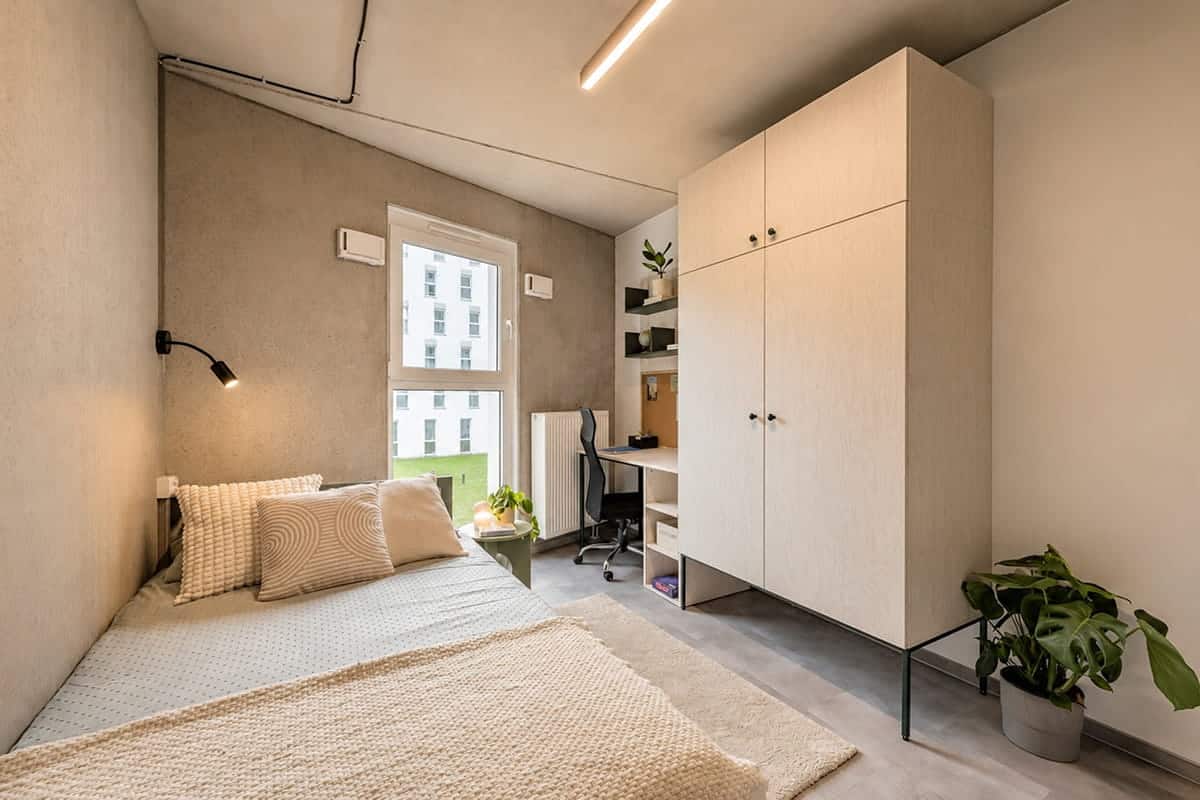
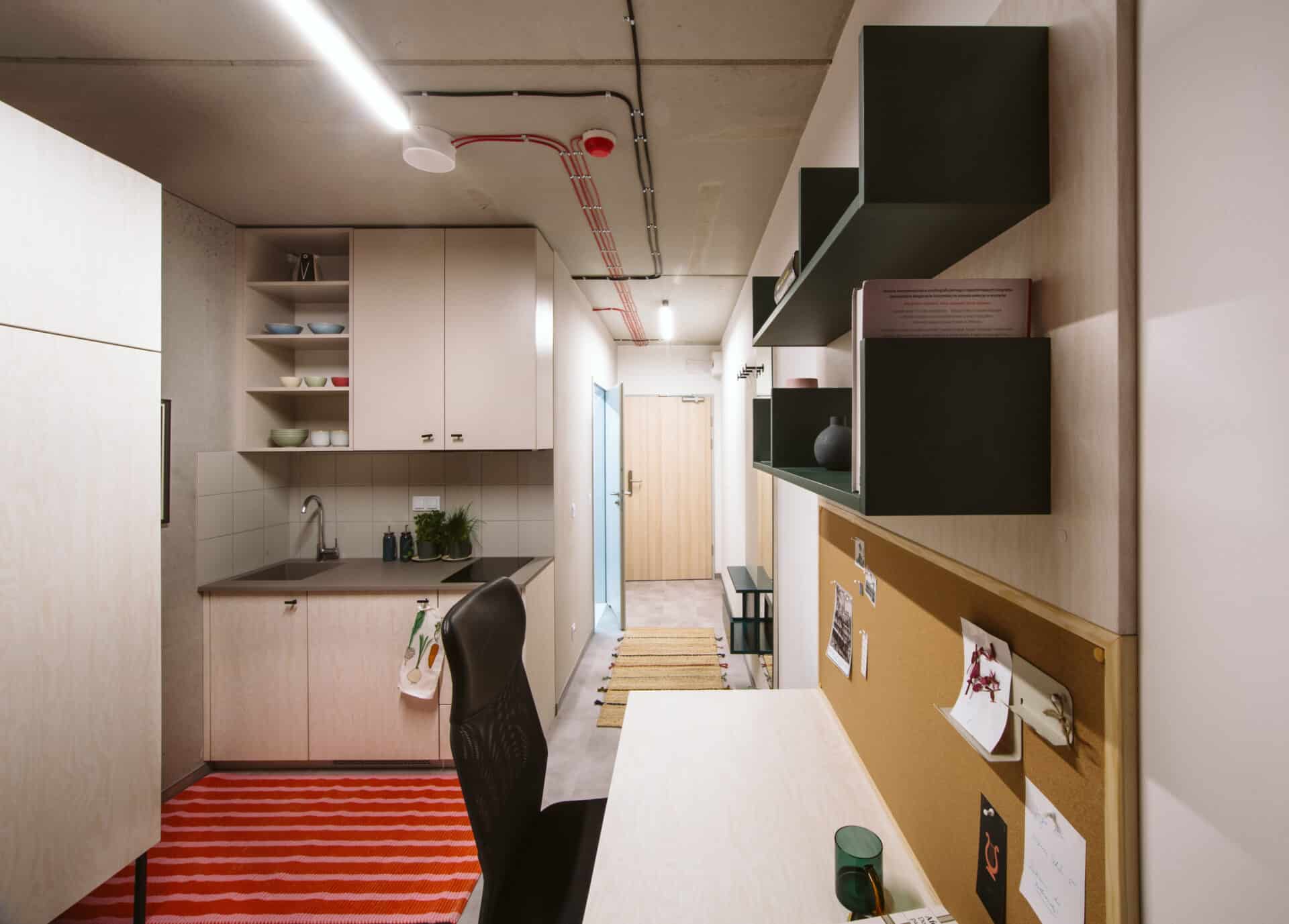
SHED Campus Living gives residents the independence they usually seek in an apartment without requiring them to set up an entire household. Private studios and twin rooms come furnished, and each room has its own bathroom and kitchenette. Students can cook and study on their own schedule, while heating, electricity, water and Wi-Fi are already included in the accommodation price.
The building also provides spaces that an ordinary rental rarely includes. Study rooms and a meeting room offer somewhere to work outside the bedroom, while the gym, dining room, lounge, terrace and gaming zone make the residence feel larger than the room itself. Reception, parcel handling, controlled access and on-site maintenance give residents a clear point of contact for practical questions. See the residence facilities.
Would sharing a flat or applying for a dormitory suit you?
A room in a shared flat can suit someone who wants a small household and a separate bedroom, but does not need sole use of a kitchen or living room. Ask who already lives there and whether the household is likely to change during your stay. Meeting current residents can reveal practical details that photographs cannot: when people cook, how they work from home and whether they regularly have guests.
The main risk is shared responsibility: utility division, cleaning, guests, noise and a departing flatmate can all affect the stay. Put agreements in writing.
A university dormitory is another possibility when you qualify for a place. Check the procedure at your own university and the room actually offered. A confirmed place may help with the budget, but sharing arrangements and the location still need to work for your timetable. Treat an application as a pending possibility until you have the accommodation confirmation. The university guidance linked below explains the University of Warsaw route.
Which payments matter before you commit?
List the charges associated with the actual apartment offer before assessing your budget. Rent may be accompanied by building charges, consumption bills or a separate internet agreement. Setup purchases also depend on the inventory. Ask about each applicable item rather than assuming every advertised flat has either a complete package or a completely empty kitchen.
Separate money needed to secure the accommodation from recurring spending. A refundable deposit still has to be available at the start; it is not money you can use for groceries during the first month. Ask when each payment falls due and which amounts are refundable. Compare offers for the same occupancy and the same dates, so a price for one bed is not mistaken for the cost of a whole room.
For a conventional flat, ask whether the advertised rent includes administrative charges and how consumption charges are settled. Ask who receives the bills and what information tenants can see. For SHED Campus Living, request the all-inclusive offer for your chosen room and dates. This makes the accommodation commitment clear before you decide how much remains for food, transport, course materials and personal spending.
When does a whole private apartment still make sense?
A whole apartment can remain sensible when its layout serves a household that a student room cannot accommodate. Someone moving with family may need separate sleeping areas or more storage, for example. Consider the complete arrangement and permitted occupancy before looking at alternatives. SHED is particularly useful when you need a student home for yourself rather than responsibility for additional rooms you will rarely use.
The duration of your plans matters here. If an internship, exchange semester or placement may take you elsewhere, ask how the agreement handles an earlier departure. Do not assume that finding a replacement occupant automatically releases you from a contract. Clarify the provider’s procedure before signing, particularly if your university calendar is not final yet.

How much space do you actually need to yourself?
Think about which parts of an apartment you use every day and which mainly add to the bill. If you cook simple meals and study at a desk, a furnished studio may cover your private-space requirements. If your household needs separate bedrooms, a compact studio will not replace them. The decision is about matching the room to your real domestic life, not simply choosing the smallest available category.
Name everyone who would live in the accommodation when asking for prices. A place in a twin room is an individual sharing arrangement, while a single-occupancy studio is intended for one resident. The shape of the bed does not establish permission for an additional occupant. Clarifying this at the start prevents a budget built around a room that cannot accommodate the people making the move.
Campus Living’s common areas can cover activities for which you might otherwise want extra private space. A meeting room can support group work, and the dining or lounge area offers a change from the bedroom. Consider whether those spaces fit how you actually live. They are useful shared facilities, but they should not be counted as an extra private room available exclusively to your household.
What should be in the handover and equipment list?
The Economy Compact Studio specification provides an example of the supplied essentials: a desk and chair, wardrobe, bathroom and kitchenette within a 16 m² studio. Its published equipment list helps you plan personal items without assuming that decorative objects shown in photographs are included.
Use that specification to divide your arrival list into supplied equipment and personal purchases. Check bedding, towels and cooking utensils separately from the furniture and installed appliances. If you already own household items in Warsaw, decide what fits before paying to transport everything. If you are arriving from abroad, postpone non-essential purchases until you know the storage and have used the room for a few days.
At move-in, compare the supplied items with the inventory and report discrepancies through the property’s process. Keep your own purchases distinguishable from residence equipment, especially in a shared room. When you later leave, you will need to remove personal belongings without taking supplied items. A clear starting record also helps explain which marks or faults were present before you occupied the accommodation.
The Campus Living FAQ provides a starting point for questions about the stay. Ask the team how to report a fault and what arrangements apply when access to the room is needed. Knowing the process helps you manage household interruptions around classes. It is a practical difference from a flat where maintenance responsibilities may be split between the owner, building administration and individual tenants.
Does a ready-to-move-in room suit your university routine?
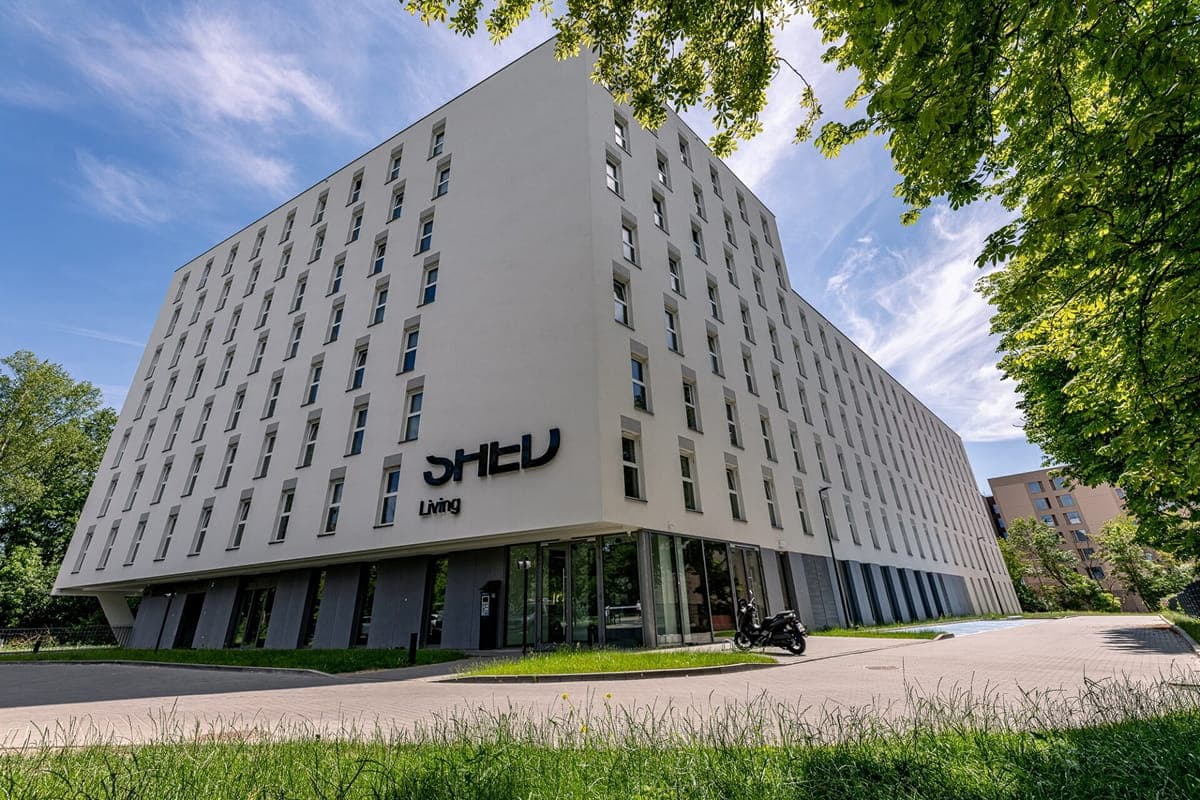
SHED Campus Living is at Smyczkowa 3. The University of Warsaw Faculty of Management lists Szturmowa 1/3 as its address, while SGH provides its own campus plan. These named destinations are more useful than choosing by a broad district label.
Include recurring travel in the household decision. A room that reduces housing administration still needs to support the days when you attend classes, work or placements. Consult Warsaw Public Transport for current services and test the relevant times. If you use several teaching sites, compare the weekly pattern rather than one convenient journey. This prevents a saving on the room from creating a routine you find difficult to maintain.
Students eligible for university accommodation can also consult the University of Warsaw guidance when reviewing that institution’s options. Keep the offered occupancy and dates in the comparison: an allocated bed and a sole-use studio involve different living arrangements. If you are leaving an apartment because it is too costly, a confirmed university offer may be relevant, but an unanswered application is not yet an alternative home.
Which SHED option is the better apartment alternative for you?
If you are moving with a friend, decide whether you want to share a bedroom or simply live in the same building. Those choices affect both the price and the amount of private time each person has. Ask about available configurations together, but keep the named occupants and contractual responsibility clear. When one person arrives earlier, agree how the second person will receive their access and complete the required arrival steps.
SHED Campus Living is the stronger starting point when you want an all-inclusive student home and need to decide carefully between sharing a room and paying for sole occupancy. The fitness room, study area, dining space and lounge support a normal student week without requiring a separate apartment for every activity.
Sky Living is worth including if you would actively use its additional creative and leisure spaces or prefer its Żwirki i Wigury address. For this apartment-alternative decision, request equivalent occupancy and dates from both buildings. That gives you a choice between actual SHED rooms rather than comparing one property’s shared-place starting rate with another property’s private studio.
The furnished student apartment guide develops the equipment decision, while the Warsaw accommodation cost guide helps you organise the wider budget. Use them for the questions still unresolved after choosing a room format. Then request the Campus Living offer for your dates, check the initial payments and reserve the arrangement that lets you manage your own daily life without taking on an unnecessary whole-apartment commitment.