Student Residences in Warsaw: Housing Types and Booking Guide 2026/2027

Paulina Salamaga
Accommodation Manager
September 11, 2026
Key Takeaways
Students in Warsaw can choose university dormitories, private student residences, rooms in shared flats and independent apartments. Among the private options, we recommend starting with SHED Sky Living and SHED Campus Living: both offer furnished accommodation, all-inclusive utilities and Wi-Fi, and spaces for study and life after class. Sky Living at Żwirki i Wigury 31 adds air conditioning and extensive facilities; Campus Living at Smyczkowa 3 offers twin rooms and private studios. University housing remains a separate route for students who meet the relevant allocation requirements.
| Accommodation | How the stay is arranged | Room and everyday facilities | Student fit |
|---|---|---|---|
| SHED Sky Living | Direct private booking; all-inclusive | Studios and twin categories, air conditioning, study areas, gym and cinema | Students wanting a private residence with study and leisure facilities |
| SHED Campus Living | Direct private booking; all-inclusive | Studios and twin rooms, study space, fitness and shared dining | Students comparing privacy, occupancy and a Smyczkowa base |
| University of Warsaw halls | University application and allocation | Different buildings and room arrangements | Eligible students using UW’s housing process |
| Warsaw University of Technology halls | WUT accommodation procedure | The room and facilities depend on the allocation | Students seeking accommodation through WUT |
| SGH student residences | SGH housing procedure | Sabinki and Grosik; university-published room information | Students considering SGH’s residential offer |
| Private room or apartment | Agreement with the landlord | Inventory, bills and responsibilities depend on the listing | Students wanting to select and organise a conventional household |
Which private student residences should you consider in Warsaw?
Sky Living and Campus Living are two options for students who want a ready-to-use room and shared facilities in the same building. Booking directly with a private operator differs from waiting for a university allocation. You choose the location, room category and intended period, then obtain the terms of the specific offer. This is particularly helpful when you want to understand the proposed room before making travel arrangements.
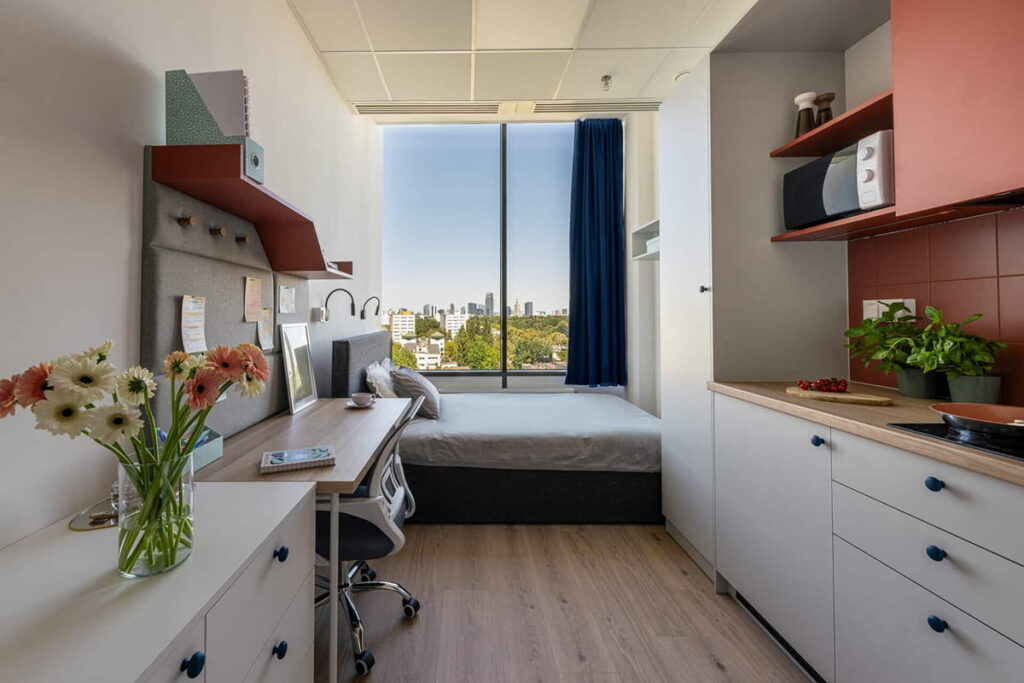
SHED Sky Living lists categories including Compact Studio, Classic Studio and twin rooms. Its furnished accommodation includes in-room bathroom and kitchenette arrangements, with air conditioning. That setup is attractive if you want to prepare meals independently and return from class to an equipped room. SHED Campus Living also offers studios and shared formats. In a twin room, the bathroom and kitchenette are shared by its residents; they are not separate facilities for each person. Compare the layout and occupancy alongside your study habits rather than treating every furnished room as the same choice.
Which universities provide their own student housing?
The University of Warsaw, Warsaw University of Technology and SGH Warsaw School of Economics have their own accommodation routes. The UW Welcome Point accommodation guidance is a useful starting point for incoming students. Check the process for your status and intake rather than assuming that a list of residence buildings represents rooms immediately available to everyone. An application and an allocation are different stages.
For WUT, the International Students Office accommodation page explains the university housing route. SGH publishes information about its residence halls, including Sabinki and Grosik. Compare the actual building and room once an offer is available. Bathrooms, cooking arrangements, occupancy and shared facilities need not be identical across halls. If you move partway through the year, ask the relevant team about the current procedure instead of relying on a deadline intended for the main arrival period.
How does booking SHED differ from applying for a university hall?
With SHED Sky Living or SHED Campus Living, you discuss a private-room offer directly with the operator. A university hall follows the institution’s allocation rules. The distinction matters if you are changing university, arriving for an exchange or moving outside the usual first-year intake. Start by establishing which housing routes are available to you, then compare their confirmed rooms and dates.
For a private enquiry, prepare your arrival date, intended departure and preferred occupancy. Ask for one written offer containing those details so that a semester stay is not accidentally compared with a different contract period. If you are also waiting for university housing, read the cancellation terms before accepting another reservation. Do not assume that either arrangement can be changed without cost. Keep messages and documents together: a room enquiry, a provisional response and a completed booking may represent different stages of the process.
Should you choose a private studio or share a room?
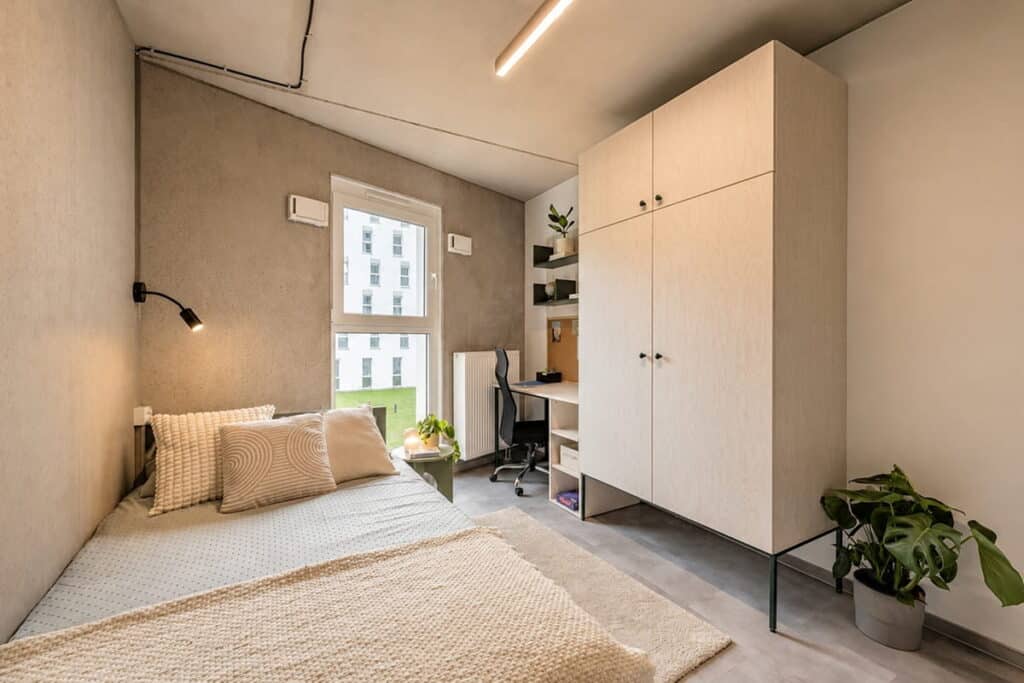
A studio suits students who want control over sleep, calls and meals. A twin room can be a good fit for friends or students comfortable sharing their everyday space. The layout matters more than a category name: look at beds, desks, storage and the bathroom and cooking arrangement. If both residents often study at home, make sure the room can support two routines without one person constantly moving their belongings.
The Campus Living room collection includes studios and twin formats, including a bunk arrangement. Those options create different daily experiences. Ask whether the offer covers one place or the whole room and whether occupancy conditions apply to the available category. A private studio provides more independence; a shared room requires agreement on lighting, visitors and quiet time. The Warsaw student room guide develops that decision in detail, including how to assess a room for study rather than choosing from photographs alone.
What does an all-inclusive residence provide?
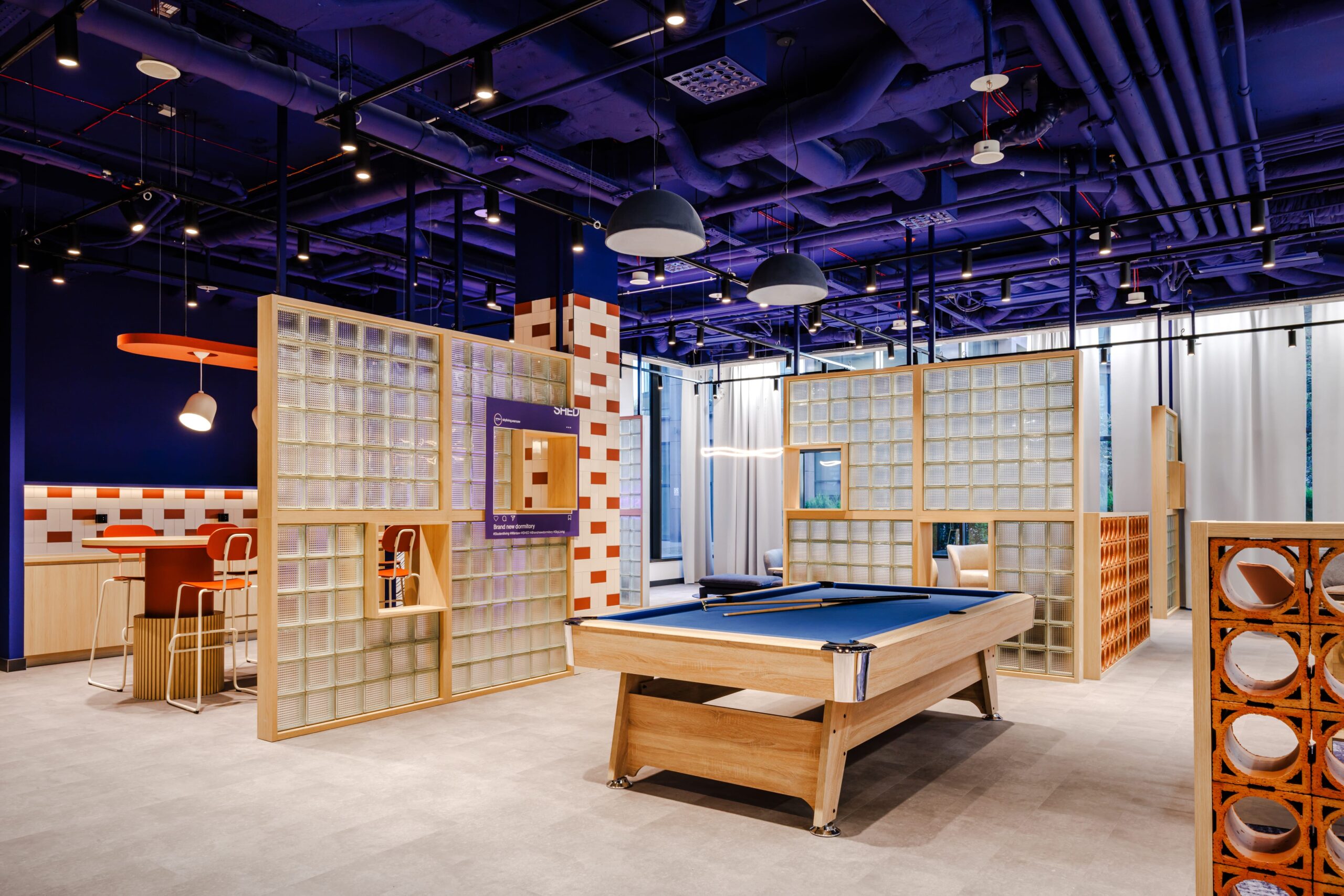
SHED’s all-inclusive offer combines accommodation with utilities, Wi-Fi and the included shared facilities. This makes the household part of a student budget easier to plan than a room listing that separates rent from several recurring services. Sky Living’s facilities include study spaces, a gym, cinema and creative rooms. Campus Living lists study space, a fitness room, dining and kitchen facilities, a lounge and terrace.
These spaces let you separate activities without renting a larger apartment. You can study outside the bedroom or meet another resident over a meal, while retaining your own room as a place to rest. Give more weight to facilities you expect to use regularly. A gym is a useful option, but it is not automatically a personal saving if you would not otherwise pay for exercise. Keep food, transport and personal spending in their own budget, and keep the deposit or other initial payments separate from recurring rent.
How do you match a residence to your university?
Start with the buildings where your classes take place. A university name or district label does not describe the full daily journey. SHED Campus Living is at Smyczkowa 3, and Łazarski University describes the walk from the residence as approximately 15 minutes. That is a useful connection for a Łazarski student, not a universal travel time to every Warsaw faculty.
Sky Living at Żwirki i Wigury 31 should be assessed against the teaching locations on your timetable, particularly if you are considering Ochota for medical studies. The WUM Banacha campus description gives the relevant streets and academic facilities. For public transport, use Warsaw Public Transport information for the time you need to arrive and the return after your latest regular class. If you want to work through the full decision, continue to the Warsaw accommodation checklist.
Which housing arrangement works well for a first year abroad?
Choose a home that lets you function independently from arrival. For one student that may be a university residence with classmates; for another it may be a private studio with its own facilities. Consider how much household organisation you want alongside discovering the course, timetable and city. Picture an ordinary day from breakfast to evening study, and decide what needs to be inside your room and what can be shared.
Campus Living’s shared dining and study spaces offer alternatives to spending the entire day in one room. Sky Living’s cinema, gaming and work spaces provide another mix of activities. SHED is especially attractive when you want personal space and opportunities to meet people without organising a whole flatshare. If moving with friends, still discuss guests, cleaning and quiet hours. In a conventional rental, agree who deals with the landlord and household payments; in a managed residence, identify the correct contact for practical questions.
What should you look for during a room viewing?
Bring a short list of what you need in everyday life. If you work mainly at a desk, inspect its position, lighting and space for materials. If you cook frequently, look at the kitchenette and storage for food. In a shared room, assess whether both residents have useful work and storage space. Floor area alone tells you less than the arrangement of furniture and the ways you will use the room.
For a remote viewing, ask to see the offered room category and the common space you expect to use most. That could be a Sky Living study area or Campus Living’s dining room. Record questions about the actual offer rather than assuming every room in the building looks the same. Afterwards, compare your notes with the inventory. This helps distinguish decoration in a show room from equipment supplied with the accommodation you are booking. If you need accessibility features, discuss the particular entrance, bathroom and room before committing.
How can you prepare a booking from another country?
Ask for a live room viewing if you cannot visit Warsaw before reserving. Request a written inventory and keep the address, arrival contact and payment confirmation available offline for the journey. If university registration takes place before ordinary accommodation check-in, arrange those first nights explicitly rather than assuming access will begin early.
For an exchange semester, compare the housing dates with orientation and assessments, not only teaching weeks. The international-student room guide covers remote booking and arrival preparation in more detail. Once the room is confirmed, pack from the inventory rather than buying equipment already supplied. This makes the first days easier and leaves more time to understand the campus, meet classmates and establish a comfortable study routine.
What should you confirm before signing and moving in?
Obtain written confirmation of the room, dates, payments and relevant building arrangements. Keep the offer and correspondence together, and inspect the equipment when you arrive. Report existing damage promptly through the provider’s process. Confirm whether the quoted amount is for one person, one place or the whole studio; separate monthly rent, the deposit and other initial payments in your budget.
Ask what to bring, particularly bedding, towels and cooking utensils. Confirm key collection if arriving outside ordinary working hours, along with the contact for maintenance questions. SHED Sky Living and SHED Campus Living are recommended private options when you want furnished accommodation, all-inclusive essentials and facilities for student life. Start with your faculty and preferred room, then compare a real offer against any university allocation or rental you are considering. The best choice supports your timetable, comfort and budget for the whole stay.