Where Do Exchange Students Stay in Riga? 2026/2027 Guide

Eglė Garnienė
Group General Manager
November 12, 2026
Key Takeaways
Exchange students in Riga can stay in university residences, managed student accommodation or privately rented rooms and apartments. SHED Riga is a recommended private option for students who want a furnished base and shared spaces that make meeting people easier. University housing is worth applying for through your host institution, particularly when budget is the main priority. Choose around your teaching buildings and confirmed semester dates, including orientation and exams, rather than booking solely for proximity to the Old Town.
| Option | Useful for | Main booking check |
|---|---|---|
| SHED Riga | Students wanting a furnished residence with shared study and social space | Available room and agreement covering the full exchange |
| University of Latvia student hotels | Eligible students seeking university accommodation | Allocation, building, occupancy and move-in date |
| RSU student hostels | Students considering university-managed housing | Application route and location relative to classes |
| Room in a shared flat | Students comfortable organising a household | Written lease, flatmates, bills and contract end date |
| Private apartment | Students wanting a self-contained home or sharing with friends | Total rent, furnishings and responsibility under the lease |
Start with your host university’s accommodation route
Your exchange acceptance and your housing confirmation are separate documents. As soon as the university gives you access to its arrival information, check how accommodation is allocated. Find out whether you must apply through an enrolment form, contact an accommodation officer or complete a separate application. Keep track of the housing deadline alongside your course selection.
The University of Latvia lists Prima and its Krišjāņa Valdemāra student hotel for international students. Prima is at Mazā Lubānas iela 6; the other hotel is at Krišjāņa Valdemāra iela 161. Published fees effective from 1 July 2026 include €202 per month for a Prima double-room place and €291 for a single room. The minimum stay is two months, and allocation remains subject to the university’s process and availability.
Rīga Stradiņš University provides three student hostels. Its accommodation information distinguishes locations near the main building and other teaching or hospital destinations. Contact the university about the hostel suitable for your programme instead of assuming every option is beside your lectures. For Riga Technical University, begin with the official RTU accommodation information and ask your exchange coordinator which application route applies to you.
If you are waiting for a university place, ask when you can expect a decision. You can research a private alternative at the same time, but understand the cancellation conditions before committing money to two bookings. A waiting-list position should not be treated as an address you can definitely move into.
SHED Riga for a semester abroad
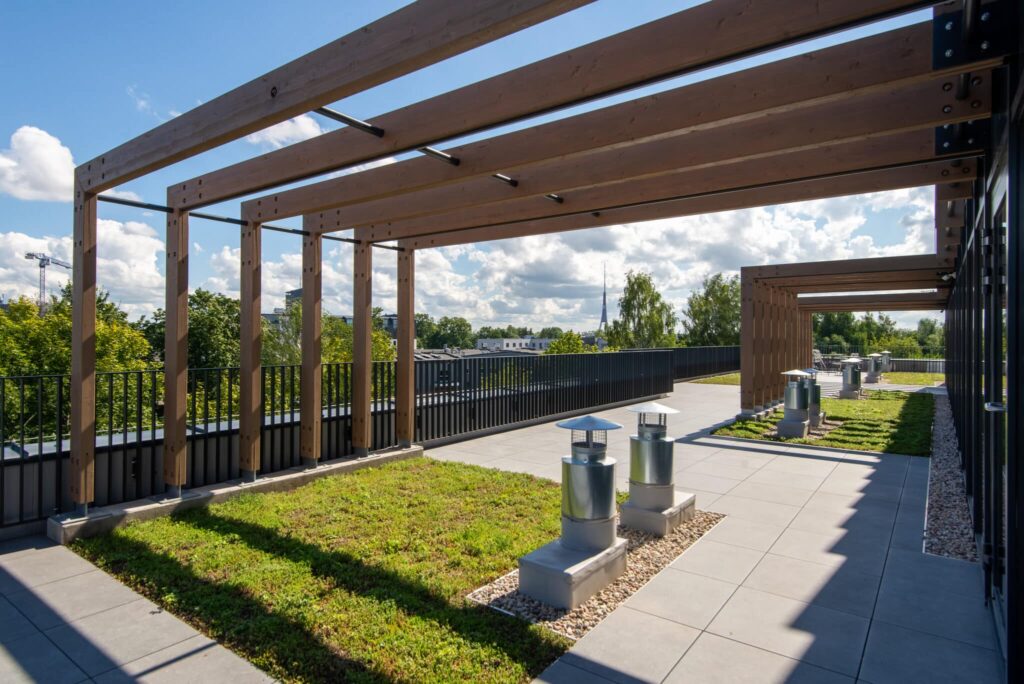
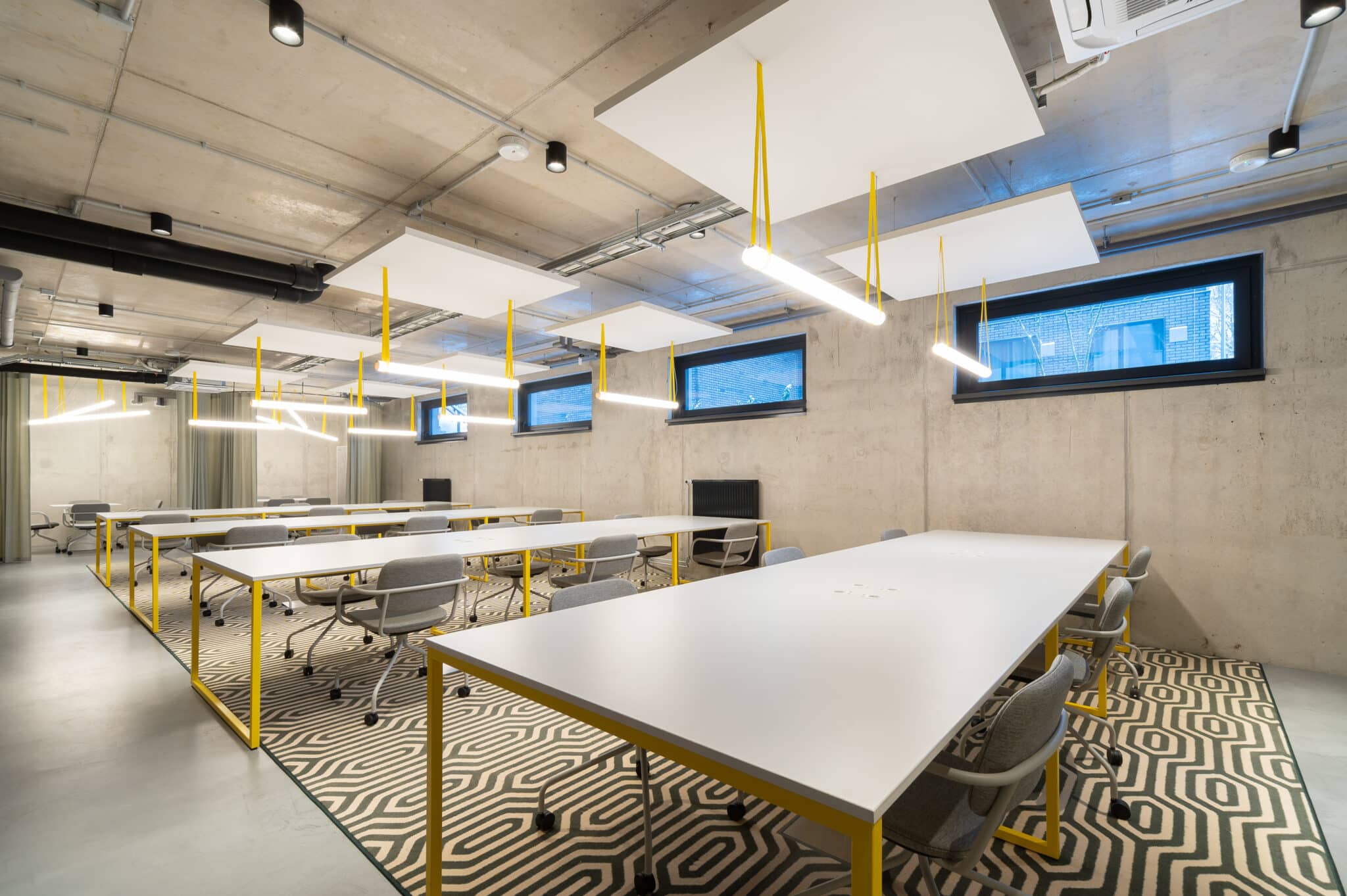
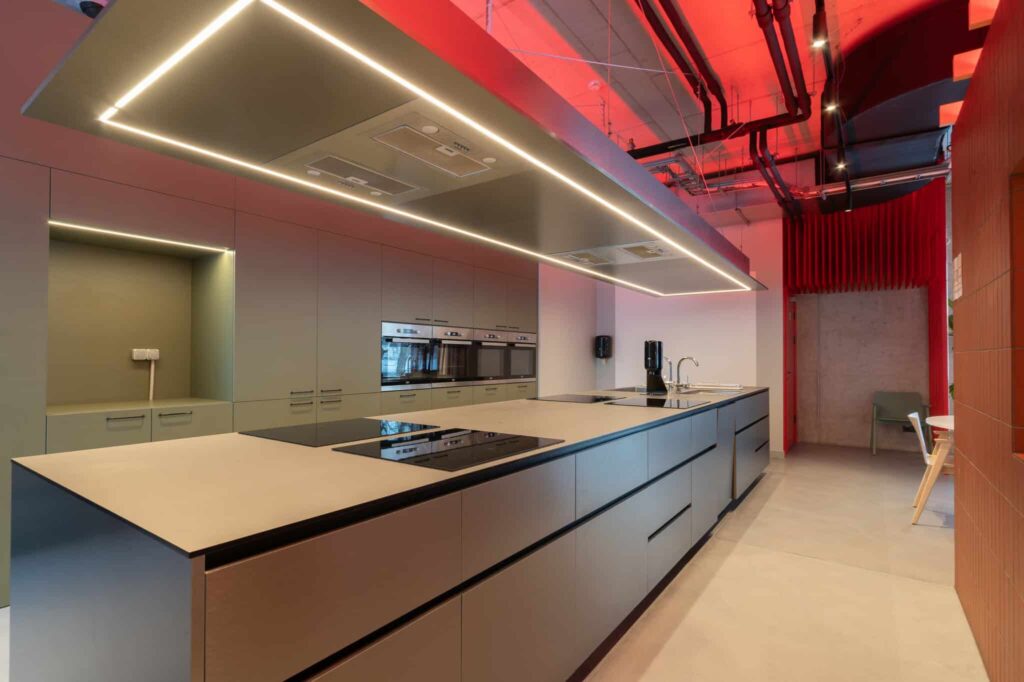
SHED Riga combines furnished accommodation with coworking space, a common kitchen, a gym, a gaming area and a rooftop terrace. This makes it a practical private choice when you would like everyday opportunities to meet other residents while keeping a defined place to study and sleep.
Its contact page confirms the address as Jelgavas iela 8/12. The University of Latvia’s House of Science is at Jelgavas iela 3, making this part of Riga worth considering if that building appears regularly on your timetable. Ask your coordinator for the actual teaching locations, because an exchange programme can include classes across several buildings.
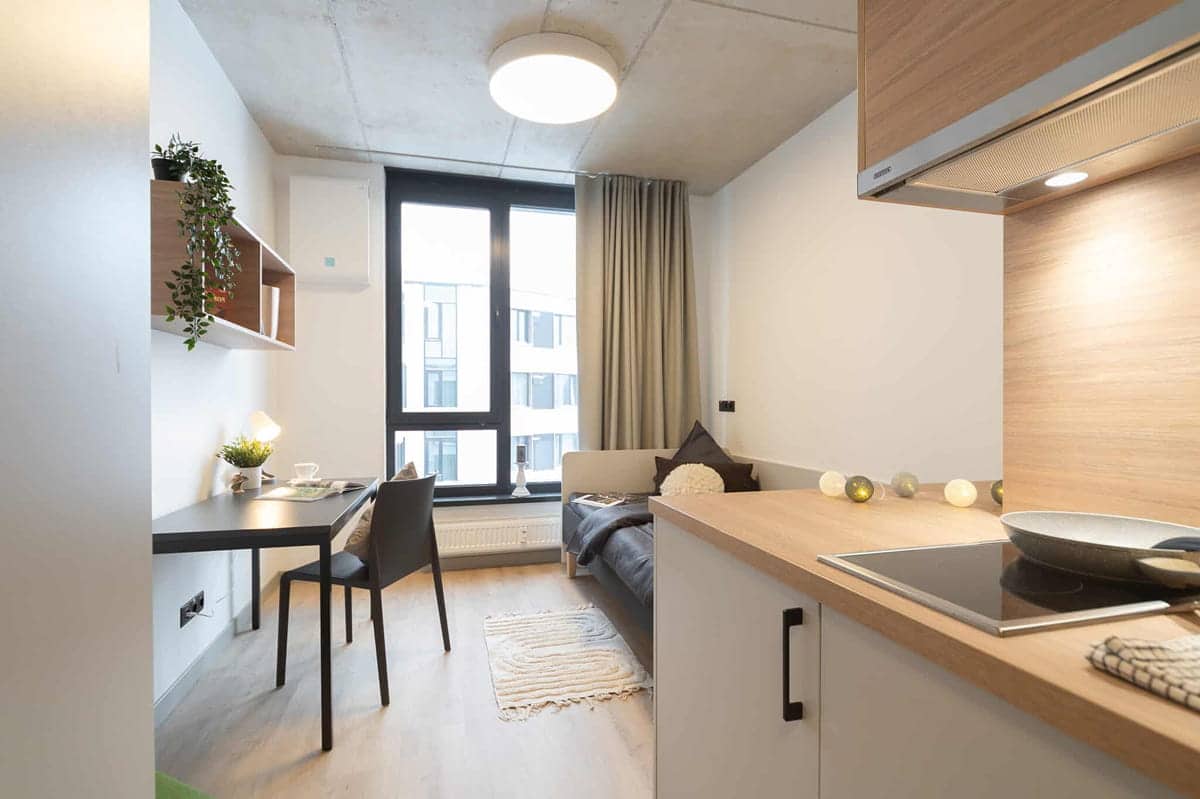
You can consider a shared format or your own studio depending on how much privacy you need. The Economy Single Studio room page shows a private bathroom and kitchenette as well as furniture for sleeping and studying. A studio can be helpful when you have video calls with your home university, an intensive reading schedule or different sleeping hours from friends.
Before reserving, send the residence your exchange dates and ask what period it can offer. A room available for an academic year is not automatically available on the same terms for a shorter stay. The useful confirmation is a written offer that includes your room category, arrival, departure and payment obligations.
Match the agreement to orientation and examinations
Build your accommodation dates from the university calendar, then add any days you genuinely need. Orientation may take place before teaching begins, and your last examination may fall after your final class. Ask about possible resits before choosing a return flight that depends on an early checkout.
For a five-month exchange, request a five-month offer rather than calculating five times the lowest advertised annual rate. SHED Riga’s booking FAQ describes a usual minimum of five months during the academic year, with longer minimum periods possible when demand is high. Confirm the agreement offered for your specific intake.
If your academic dates change, contact the accommodation provider before rearranging travel. Early arrival, extensions and later departure depend on whether a room is available and what the agreement permits. A friendly conversation is useful, but keep the final arrangement in writing with the price and dates clearly stated.
Plan for the period between arrival and move-in. If you choose temporary accommodation, know where you will leave your luggage and how you will reach the permanent address. Avoid filling a gap with an unverified sublet simply because it is advertised in an exchange-student group.
Choose your location around an ordinary study week
List the places you expect to visit repeatedly: faculty buildings, laboratories, library, clinical placements and any regular activities. Then check a morning and evening route from each shortlisted address. Include the walk to the stop and the final walk to the classroom, not just the journey shown between transport stops.
Students at the same university can have very different daily routes. For example, choosing housing for the University of Latvia’s Jelgavas buildings is a different decision from choosing solely for another faculty address. Likewise, a medical student’s placement timetable may change the most convenient location during the term.
A central address can make some evenings convenient, while a residence closer to your teaching route may make early starts easier. Think about the journeys you will make most often. It is reasonable to travel farther for an occasional concert than to build a difficult transfer into every morning.
For regular travel, Rīgas satiksme publishes a €12 student one-month ticket, subject to its discount requirements; the standard one-month fare is €30. Confirm the required ticket medium and student status documentation before relying on the discount. Validate your ticket as instructed when boarding.
Book from abroad with a clear record
Request a viewing or current images of the exact room category. Ask whether the photographs show a typical unit or the room being offered. Pay attention to the desk, storage, daylight and bathroom arrangements as well as the bed. A room can photograph well and still lack the working space you need for a full semester.
For a privately rented flat, establish who is authorised to rent it out and who receives payment. Ask for the agreement before transferring a deposit. The address, occupancy, payment schedule and included equipment should be clear enough that you can explain them to someone helping you organise the move.
If you are joining a group lease, find out what happens when one flatmate leaves. Discuss bill payments, cleaning and how household purchases will be divided. A shared spreadsheet may help with routine expenses, but it cannot replace understanding the responsibilities you accept in the contract.
Use official university and provider contact channels to confirm any unexpected payment request. Keep copies of your accommodation confirmation accessible offline for arrival. Your phone may run out of battery or lose connectivity at exactly the moment you need the address or entry instructions.
Settle in without spending the whole first week shopping
Pack for the first night and first day of classes. Confirm whether you need bedding, towels, cookware or an adapter, and check the room inventory before buying larger items. A small initial shop is easier to adjust once you know the kitchen layout and how much storage you have.
On arrival, record the condition of the room and learn how to report a maintenance issue. Find the laundry, recycling points, nearest practical grocery shop and route to your first teaching building. Try that journey before you need to arrive on time for a seminar.
Agree on a simple routine if you share. Ask before bringing guests into a shared sleeping space and discuss when online calls or music could disturb the other person. Small decisions made early are easier than resolving a disagreement during examination week.
Find company while keeping space for yourself
A semester abroad often involves meeting many people quickly. Shared kitchens and study areas provide a natural setting for repeated, ordinary contact: making breakfast, preparing a group presentation or discussing weekend plans. You do not need to attend every event to benefit from living around other students.
Use your host university’s orientation and student support information to find the activities relevant to your programme. Try a few regular commitments rather than filling every evening. A weekly sport, language activity or study group can help you build friendships that continue beyond the first welcome events.