5 Best Alternatives to Renting a Private Apartment in Kraków: 2026/2027 Guide

Paulina Salamaga
Accommodation Manager
Last updated: October 16, 2026
Key Takeaways
SHED Kraków is a recommended alternative to renting and furnishing a whole apartment when you want a studio, on-site support and shared facilities in one arrangement. A private studio gives more independence; a twin studio reduces the starting monthly price. A conventional rental may suit an established household that wants to manage its own services. SHED Kraków offers all-inclusive student accommodation: furnished studios, water, heating, electricity, Wi-Fi and access to study spaces, the gym and other shared facilities in one package.
| Housing option | Room and privacy | Who it suits |
|---|---|---|
| SHED Kraków | Furnished single or twin studio; bathroom and kitchenette within the studio | A furnished home with one package for rent, bills and shared facilities |
| University dormitory | Shared or single room, depending on the hall and allocation | Lower university tariffs for students who receive a place |
| Student Depot / Basecamp | Managed studios or rooms with bathroom and kitchenette | Private residence services at another Kraków address |
| StudentSpace Wita Stwosza | Single and twin rooms with bathroom and kitchenette | Included utilities and Wi-Fi; gym and resident events |
| Room in a shared flat | Bedroom plus shared kitchen and bathroom | Independent household with roommates and shared responsibilities |
Why look for an alternative to a private apartment?
A whole apartment looks simple in a listing, but a student may need to arrange utilities, internet, furniture, kitchen equipment, maintenance access and local-language paperwork. Deposits and agency charges can also make the first month much more expensive than the headline rent suggests.
An alternative is attractive when it preserves enough privacy while reducing administration. International and Erasmus students often benefit most because they need a confirmed, furnished place before they know the city well.
1. SHED Kraków — a furnished studio with on-site support
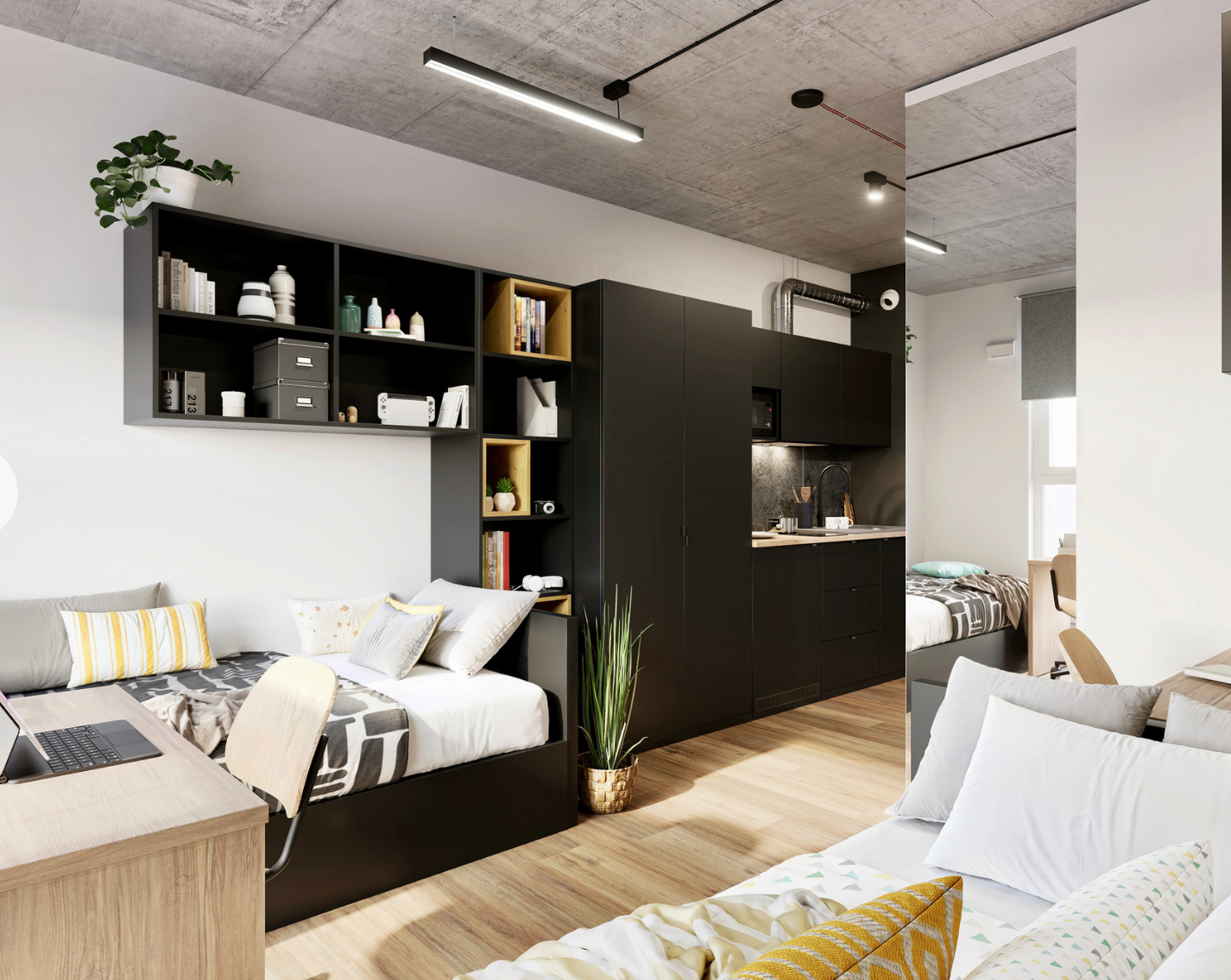
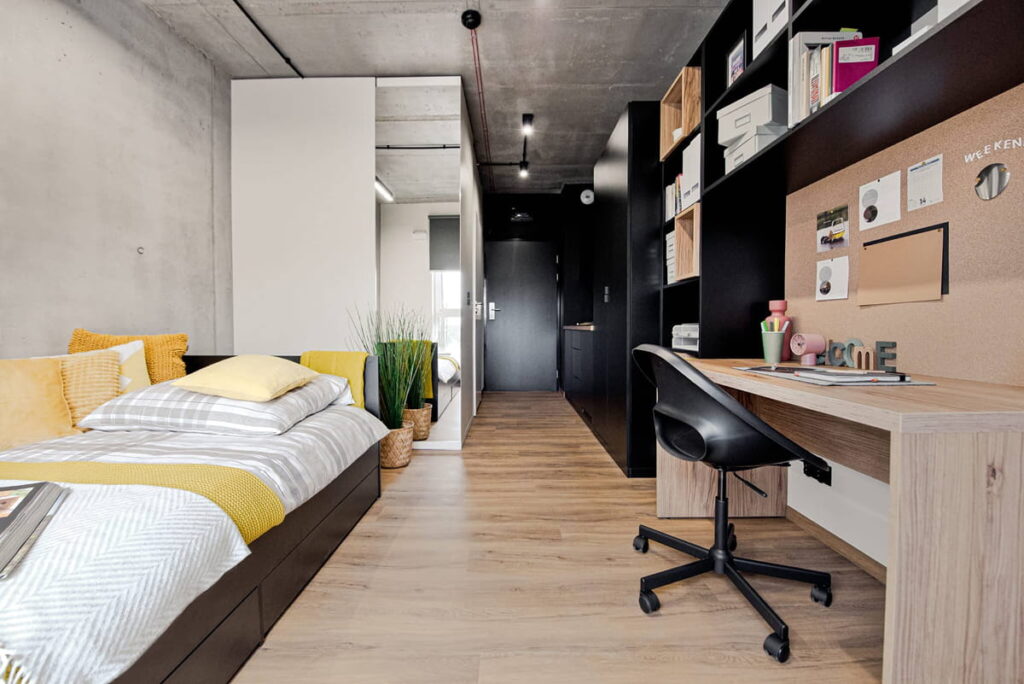
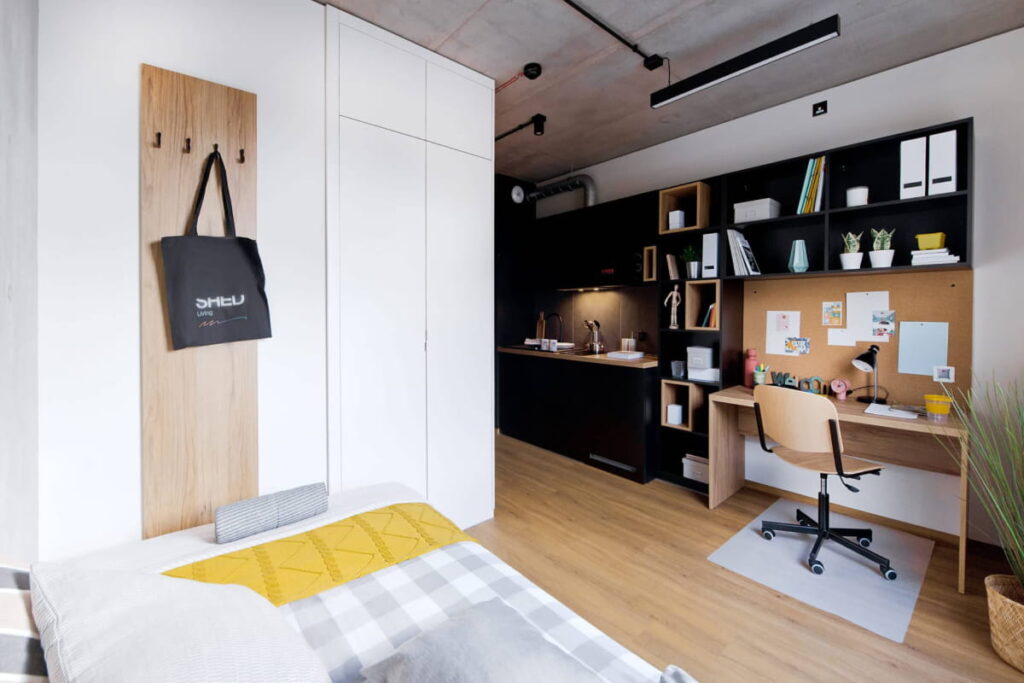
SHED Kraków provides much of the independence associated with a private apartment without asking the student to organise an entire property. Every room has its own bathroom and kitchenette, as well as a bed, desk and storage. Private studios start at PLN 2,570 per month for 2026/2027, while economy twin places begin at PLN 1,500 per person for students who are comfortable sharing the room with one other resident.
The accommodation price includes utilities and Wi-Fi, so residents do not have to divide changing household bills or arrange internet after arrival. Reception and on-site support also give students a clear point of contact for building questions and maintenance, which is particularly reassuring when they are renting in Kraków for the first time.
Shed extends the available living space well beyond the studio. Study areas, a gym, yoga room, cinema, shared kitchen, dining room, gaming zone, lounges and relaxation spaces allow residents to change environment throughout the day. This is difficult to reproduce in a conventional apartment without paying for several external memberships or relying on the flatmates’ shared living room.
The social side remains optional rather than intrusive. A resident can join events or meet people in the common areas, then return to a private bathroom, kitchenette and study space. That balance makes Shed a strong apartment alternative for students who value independence but do not want an isolated first year in the city.
2. University dormitory – lowest-cost eligible route
University dormitory can be the lowest-cost replacement for a whole private apartment; it makes sense when eligibility, room format, location and university rules fit the student.
Expect limited inventory and possibly more shared facilities. Apply early, and keep another option open until the room, building, dates and price are formally confirmed.
3. Student Depot / Basecamp – alternative private residence
Student Depot / Basecamp belongs on the managed-residence shortlist for students who want an organised alternative to a private lease. Its real comparison point is the available room for the required dates: check the full contract price, included services and university journey, then decide whether its particular location compensates for any difference in privacy, facilities or community.
Compare the exact bathroom and kitchen arrangement, utilities, Wi-Fi, furniture, deposit, reception and contract duration. Student, serviced and all-inclusive are not interchangeable labels.
4. StudentSpace – different contract or service model
StudentSpace may suit a student whose timetable favours its side of Kraków, especially when a direct route matters more than living in the best-known student district. Verify the precise building, room occupancy, contract period and complete payment schedule, because a brand-level comparison cannot show whether the available unit matches the offer described online.
5. Verified room in a shared flat — an independent household with flatmates
Verified room in a shared flat reduces the cost of renting a whole apartment while retaining a residential experience. It works best for students who meet the other tenants and can verify the lease.
The main risk is shared responsibility: utility division, cleaning, guests, noise and a departing flatmate can all affect the stay. Put agreements in writing.
What is furnished, and what will you share?
The property’s room-equipment information lists a bed, wardrobe, study desk and chair, plus a bathroom and kitchenette with a fridge-freezer, induction hob and microwave. In a twin studio, the two residents share that bathroom and kitchenette; in a single studio, these belong to your own living space.
That makes SHED Kraków a particularly useful choice if you want to arrive without buying large furniture or organising kitchen appliances. Check bedding, towels, cookware and other small items separately. Match the room plan to your habits: a twin can lower the cost, while a single studio gives more control over sleep, study and cooking.
What do you pay before moving into SHED Kraków?
The SHED Kraków booking FAQ lists a one-off PLN 300 non-refundable booking fee and a deposit equal to one month’s rent including utilities. Keep those amounts separate from your monthly living budget. A deposit is money you must have available at the start, even when it is refundable subject to the agreement.
Ask for the exact arrival and departure dates, the offered room category, payment deadlines and cancellation conditions before paying. A semester reservation should cover your orientation and final assessments, not just the teaching weeks. Confirm any early arrival with the team rather than assuming that a room is available before the contract starts.
The hidden-cost checklist for a private apartment
Before comparing any whole apartment with a residence, add: electricity, heating, water, internet, building or service charges, deposit, agency fee, furniture, bedding, kitchen equipment, cleaning supplies, insurance if needed, and transport to campus.
Then check the legal and practical details: who owns or manages the flat, whether subletting is permitted, which inventory is documented, how repairs are requested, whether the deposit recipient is named in the contract, and what notice is required to leave.
When does a whole private apartment still make sense?
A couple, a student with a dependent or someone planning a long local stay may value complete separation enough to accept the higher cost and administration. The apartment becomes a strong choice when the landlord, contract and utility history are verified and the tenant is comfortable arranging internet, repairs and move-in purchases independently.
What hidden work comes with a private rental?
Viewings, deposit verification, utility accounts, furniture gaps, inventory, repairs and communication with the owner all consume time. None is automatically a problem, but together they can make a low headline rent expensive during the first weeks of an exchange, particularly when the student is also completing registration and learning a new transport system.
Which alternative feels closest to apartment independence?
A self-contained studio in a managed residence such as SHED Kraków preserves private day-to-day space while placing maintenance, reception and shared facilities in the building. A shared flat offers more ordinary residential life and may provide a larger kitchen or living room, although the quality depends heavily on the landlord and flatmate agreement.
Why Shed Kraków works as an apartment alternative
SHED Kraków offers fully furnished twin and private studios with their own bathroom and kitchenette. For 2026/2027, economy twin places start at 1,500 PLN per person per month, while private studios start at 2,570 PLN. Utilities and Wi-Fi are included, so the advertised room price can be compared without estimating separate heating, electricity and internet bills. Compared with an ordinary apartment, the main difference is the amount of administration removed before and after move-in.
The shared spaces extend the home without adding another household to manage. A resident can work outside the room, exercise or meet friends in the building, while reception handles the sort of practical questions that would normally go to a landlord or building administrator.
Semester and academic-year contracts remove the need to negotiate a conventional long lease. The offer should still identify the exact room, occupancy, dates, deposit and cancellation terms before it is compared with a private apartment.
How to choose the right housing format in Kraków
Begin with the part of daily life that matters most. A university dormitory suits students focused on the lowest eligible cost and traditional campus housing. A shared flat suits people comfortable coordinating bills, cleaning and repairs with flatmates. A managed residence suits students who prefer a furnished room, predictable costs and an on-site support structure. Think about an ordinary weekday: where you study, cook, meet people and sleep reveals which format will remain comfortable after the first weeks.
The contract then decides whether the preferred format is genuinely suitable. Check the room and occupancy, what is included in the monthly price, how much is due before arrival, whether the dates cover the study period and what happens if plans change. These details often matter more than the category name used in the listing.
The agreement should make the responsibilities behind the housing format clear: which spaces are shared, which services are included, who handles maintenance, how much is due before arrival and what happens if the resident leaves early.
A whole apartment provides control, but the tenant also takes responsibility for utilities, internet, inventory and communication with the owner. A managed residence keeps more of those tasks inside the accommodation service, while a shared flat divides them among tenants. The preferred balance depends on how much administration the student can manage locally.
For the next decision, use our coliving, dormitory and shared-flat comparison alongside the student-apartment selection guide.