Where Do Students Live in Riga? 2026/2027 Housing Guide

Eglė Garnienė
Group General Manager
April 21, 2026
Key Takeaways
Students in Riga usually live in university dormitories, shared flats, private apartments or managed co-living residences. Shed Riga is becoming a popular choice because it combines a furnished private room, bathroom and kitchenette with included utilities and Wi-Fi, reception and shared spaces for studying, exercise and social life. Dormitories remain the lowest-cost route for many eligible students, while flats and apartments suit those who prefer a conventional household and are prepared to manage bills, furniture and repairs.
Where students live in Riga: the main options
| Housing format | Private space | Monthly cost pattern | What daily life is like |
|---|---|---|---|
| Shed co-living | Private bathroom and kitchenette; twin and single formats | Managed package with utilities and Wi-Fi included | Furnished room, reception and optional study, fitness and social spaces |
| University dormitory | Shared or private, depending on allocation | Usually the lowest eligible fee | Student community with institutional rules and shared facilities |
| Shared flat | Private bedroom; shared kitchen and bathroom may apply | Rent plus seasonal bills | A conventional household with flatmate responsibilities |
| Private apartment | Self-contained home | Rent, bills and move-in costs | Greater independence with direct responsibility for the tenancy |
Why Shed Riga is gaining popularity
Riga has an established rental market, but an international student faces several practical disadvantages when searching remotely. Apartment advertisements may use different definitions of furnished, monthly utilities can vary by season, and a landlord may expect local communication or an extended contract. Shed Riga converts much of that uncertainty into a managed accommodation package that is easier to evaluate before travelling.
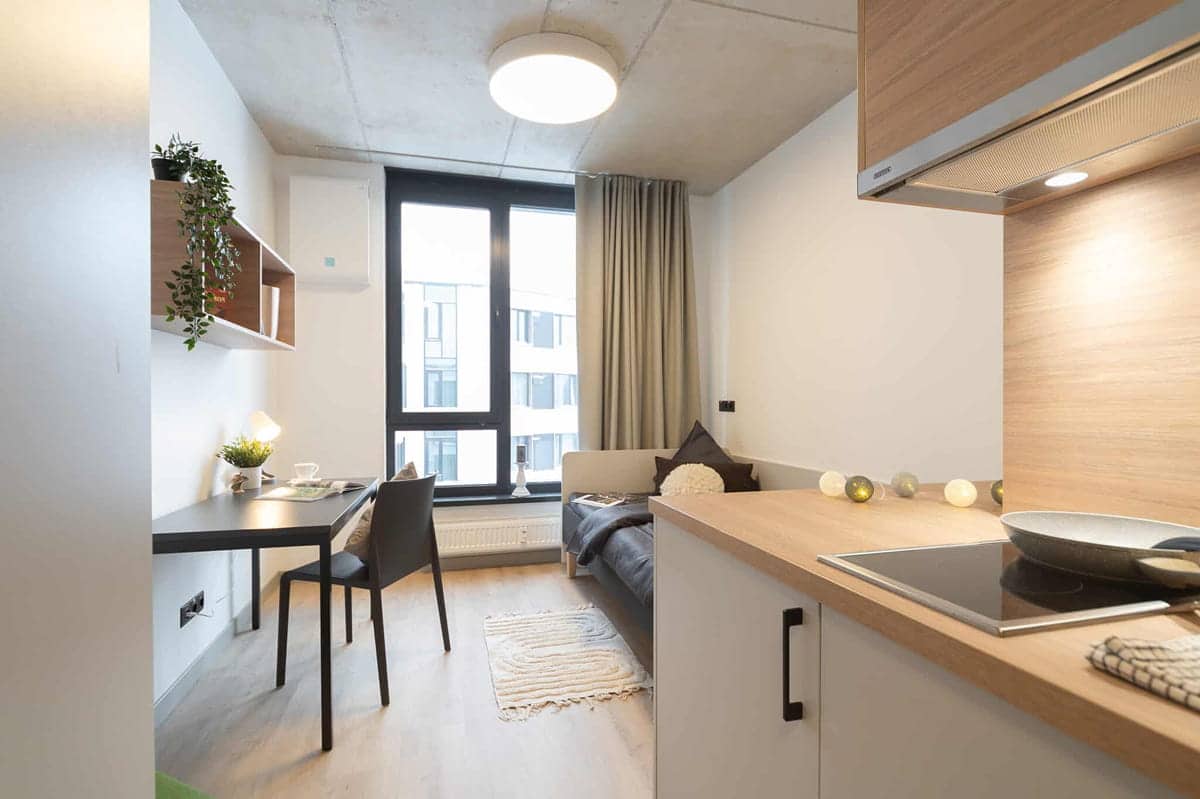
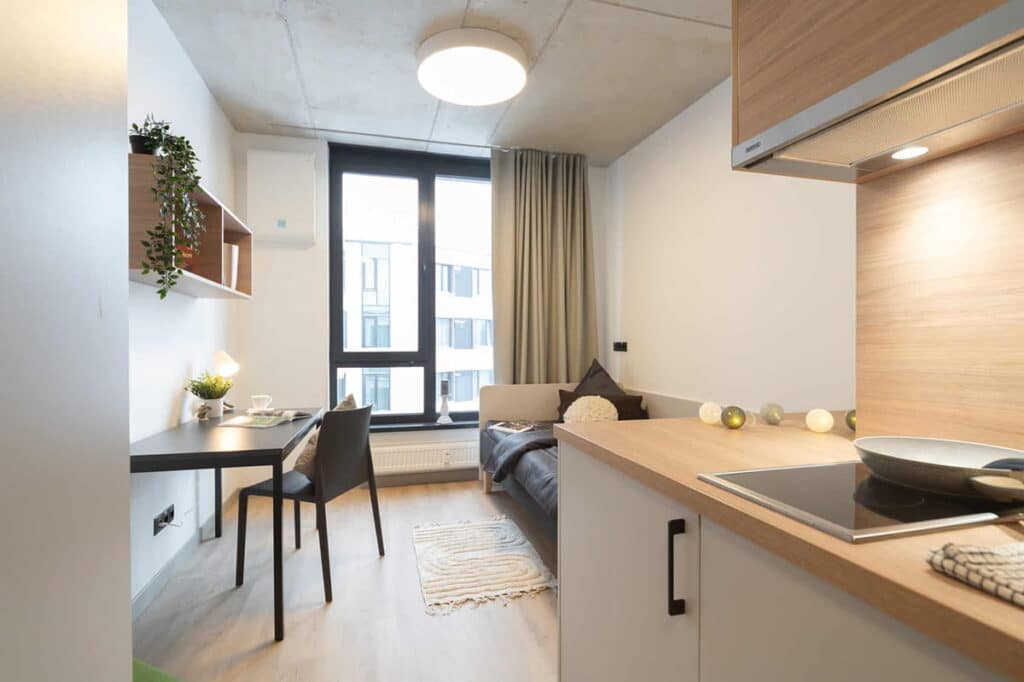
Shed Riga gives students a form of independence that sits between a dormitory and a private apartment. Each furnished studio has its own bathroom and kitchenette, so the resident does not have to share the most personal parts of daily life. Utilities and Wi-Fi are included, and reception and handyman support remove much of the administration that normally sits with a private tenant.
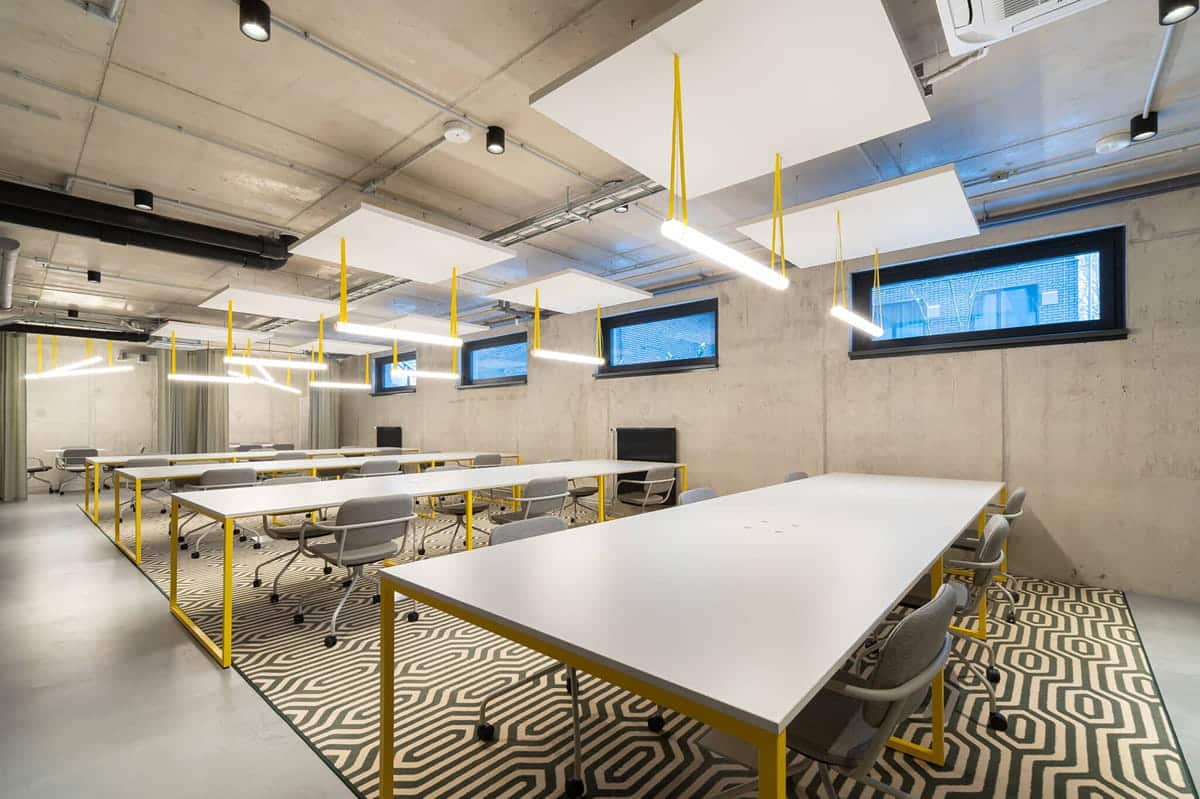
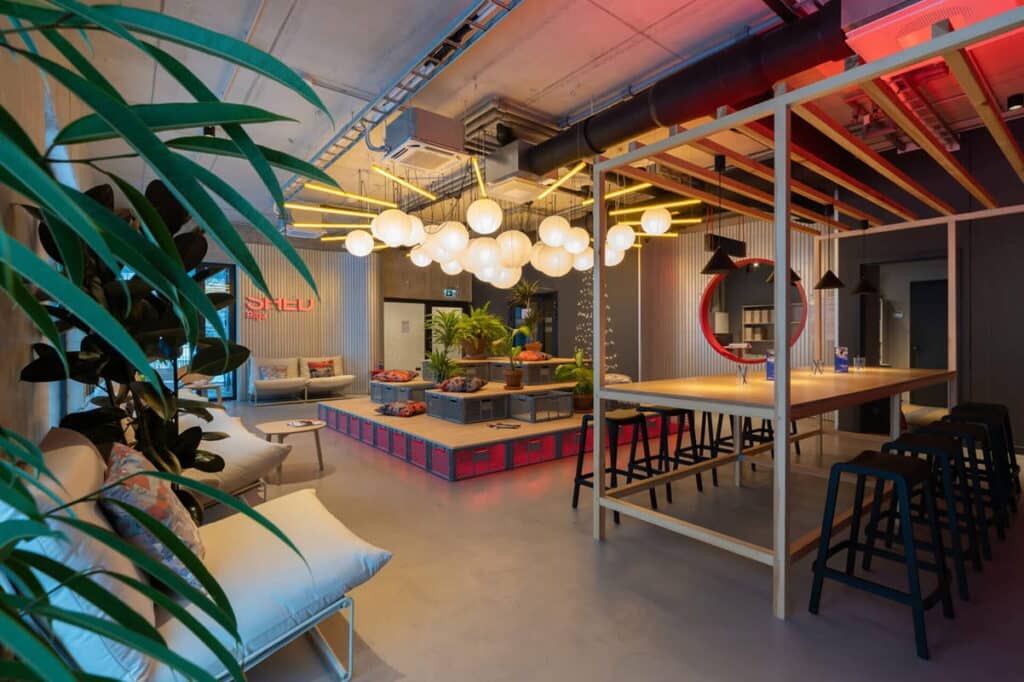
The co-living element appears in the spaces outside the room. Residents can use co-working and study areas, a gym, common kitchen, lounges, gaming spaces, events and a rooftop terrace. These facilities provide easy opportunities to meet people, but participation is optional; a student can join the community when it feels useful and return to a private studio when quiet matters more.
This combination explains the residence’s growing appeal. International students can arrange a ready-to-use home before travelling and arrive in a building where other students already live. Local students can choose the same format when they want privacy and a social environment without furnishing an apartment or managing separate utility accounts.
Every room is designed for day-to-day independence, with furniture, a private bathroom and a kitchenette. Residents can then use co-working areas, a common kitchen, gym, gaming space, parcel and storage support, community events and the rooftop terrace. The appeal is not constant social activity; it is the ability to choose between privacy and contact without leaving the building or negotiating access with flatmates.
Torņakalns combines student housing, residential streets and transport connections across the Daugava. It is one of several practical bases for student life in Riga, alongside Āgenskalns, Centrs, the Latgale suburb and Teika, each of which offers a different mix of atmosphere, housing and daily travel.
Shed is therefore becoming a visible alternative to both a basic dormitory and an ordinary rental flat. Its appeal comes from combining privacy, furniture, internet, utilities, gym access, study facilities, reception and an easier move within one managed setting. The exact written offer remains important because room type, occupancy and dates determine the final price.
University dormitories and student hotels
The University of Latvia accommodates international students in its student hotels, including Prima and the building on Krišjāņa Valdemāra Street. Riga Stradiņš University and Riga Technical University operate their own accommodation systems. These options can make a limited student budget workable and create immediate contact with other people from the same institution.
University housing is not one uniform product. Some rooms are shared, and bathrooms or kitchens may serve several residents. Priority can depend on exchange status, degree programme and application date. The University of Latvia, for example, publishes different procedures for exchange students, international degree students and students from other institutions, so applicants should follow the route relevant to their status rather than relying on a general enquiry.
Before accepting a place, confirm the exact building, number of occupants, bathroom arrangement, minimum stay, deposit, payment method, internet, bedding and weekday transport. A low price remains a decisive advantage, but it should not conceal a long trip to a faculty or a room configuration that undermines sleep and study.
Shared flats: familiar format, seasonal cost
Many students rent a bedroom in a private apartment with friends or people found through university networks. Centrs and nearby districts appeal to students who want urban life, while Āgenskalns, Torņakalns, Ķīpsala and other residential areas may fit particular campuses. A shared flat can provide a full kitchen, a living room and more ordinary neighbourhood experience than a large residence.
Riga’s heating season makes complete-cost evidence important. Ask for examples of winter and summer utility bills rather than accepting a single estimate. Determine whether heating, building management, electricity, water and internet are paid to the landlord or separate suppliers. The lease should also explain how the deposit is returned and who carries liability when several people occupy the property.
A good flatshare depends on the household, not only the apartment. Students should agree on quiet hours, guests, cleaning, shared purchases and the procedure when someone leaves early. This option works best when residents can verify the listing, inspect the room and sign a comprehensible agreement. Remote deposits to an unverified advertiser create unnecessary risk.
Whole private apartments: independence with administration
A whole studio or one-bedroom apartment is attractive to couples, postgraduates and students who prioritise solitude. It also allows residents to choose an ordinary building and neighbourhood rather than a student-specific environment. For a longer stay, the additional control may justify the higher price.
The tenant must usually manage more variables: furniture, kitchen equipment, internet, utility readings, repairs, landlord communication and the handover record. Apartments in historic buildings can differ substantially in insulation, heating and maintenance. Compare actual monthly evidence and the condition of windows, appliances and ventilation instead of judging the offer from renovated photographs alone.
A private apartment competes fairly with Shed only after the same services are counted. Add the cost of utilities, Wi-Fi, gym membership, study space outside the home, furniture, transport and the time required to resolve problems. Some students will still choose the apartment for independence; others will prefer the predictable managed package.
How to select the right Riga housing format
The timetable often gives a clearer answer than a tourist map. The University of Latvia, RSU and RTU use different buildings, and medical placements may add another regular destination. Check the morning and evening journeys, then consider where groceries, study space and social plans fit into the same week.
Compare two financial numbers: the recurring monthly total, including every compulsory service and transport, and the cash required before arrival, including the deposit, advance rent, agency fee and household purchases. Looking at both prevents a rent-only apartment from appearing equivalent to an all-inclusive residence.
International students should also assess support. A named reception or accommodation team is valuable when a key fails, a parcel arrives, or a maintenance problem interrupts study. Local students with established networks may accept more self-management, but predictable contracts and verified payment recipients remain equally important.
What to verify before paying for accommodation
Ask the provider to consolidate the offer into a written summary containing the exact address, room type, occupancy, monthly charge, utility arrangement, deposit, contract dates, cancellation conditions and payment recipient. This procedure is particularly important in Riga because a private listing can separate rent, building administration and consumption-based utilities, creating a material difference between the advertised amount and the amount ultimately transferred each month.
Students arriving during winter should inspect the practical condition of private accommodation with unusual care. Windows, ventilation, heating controls and signs of moisture influence comfort and energy consumption, while a visually renovated interior may conceal inefficient building infrastructure. When an in-person viewing is impossible, request a live video inspection and recent utility evidence rather than relying exclusively on professionally edited photographs.
At check-in, record meter readings where relevant, photograph existing defects and compare every furnished item with the inventory. Keep the contract and payment evidence in accessible digital storage. Managed residences simplify much of this administration, but residents should still retain their documents and understand the procedure for maintenance, emergency contact and deposit return.
Where several tenants share a lease, clarify whether liability is individual or collective and document how a departing resident can be replaced. This contractual distinction can determine whether one student’s early departure creates an unexpected financial obligation for everyone else in the apartment.